More companies are hiring voice talent remotely than ever before. From commercials and corporate narration to healthcare campaigns, eLearning, animation, and branded content, clients need voice actors who can deliver professional sound without requiring an outside studio session.
That is where a professional home voice over studio becomes incredibly important.
Clean, polished audio is no longer considered a bonus in voice over. It’s now part of the expectation. Producers, casting directors, agencies, and brands want voice talent who can provide reliable, broadcast-ready recordings while also making the production process smooth and stress-free.
But what actually makes a recording studio professional? In my voiceover career, my home voice over studio has evolved to meet industry standards for broadcast-quality audio, ensuring reliable, high-quality delivery for clients around the world.
Below is a simple breakdown of what clients should look for when hiring a remote voice actor, and why these details matter when it comes to audio quality, workflow, and the final production itself.
1. A Quiet Recording Environment Matters More Than Expensive Gear
One of the biggest misconceptions about a professional voice over recording studio is that success comes from owning the most expensive microphone. In reality, the recording environment matters just as much, if not more!
A professional home voiceover recording studio should minimize:
- Background noise
- Echo and reverb
- Outside distractions
- Harsh reflections from walls and hard surfaces
Even high-end equipment cannot fully compensate for poor acoustics. A well-treated recording space helps create audio that sounds:
- Clean
- Controlled
- Natural
- Consistent
- Easy to mix in post-production
For clients, this means less editing, fewer technical issues, and a more polished final product. Whether producing a national commercial or a simple narration project, strong audio quality helps elevate the entire experience for the listener.
2. Professional Voice Over Setup and Equipment
A professional voiceover setup should support clear, broadcast-quality recordings that are ready for production use.
Most professional home studio includes:
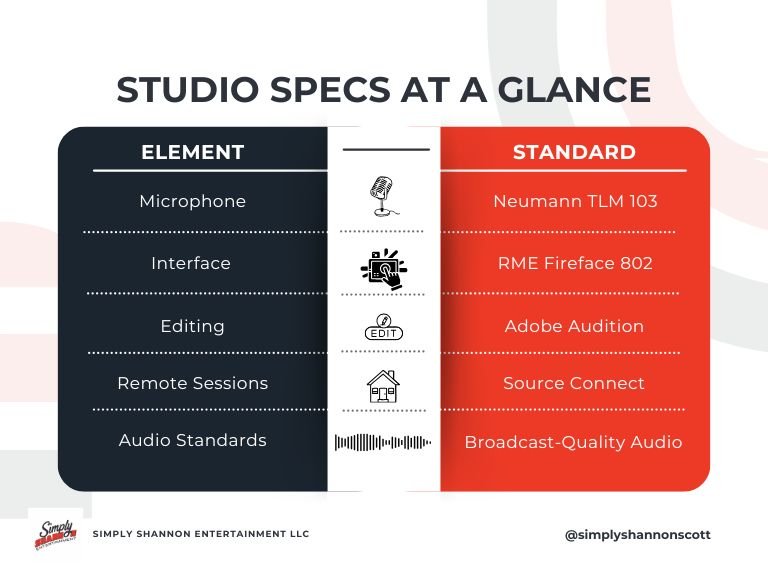
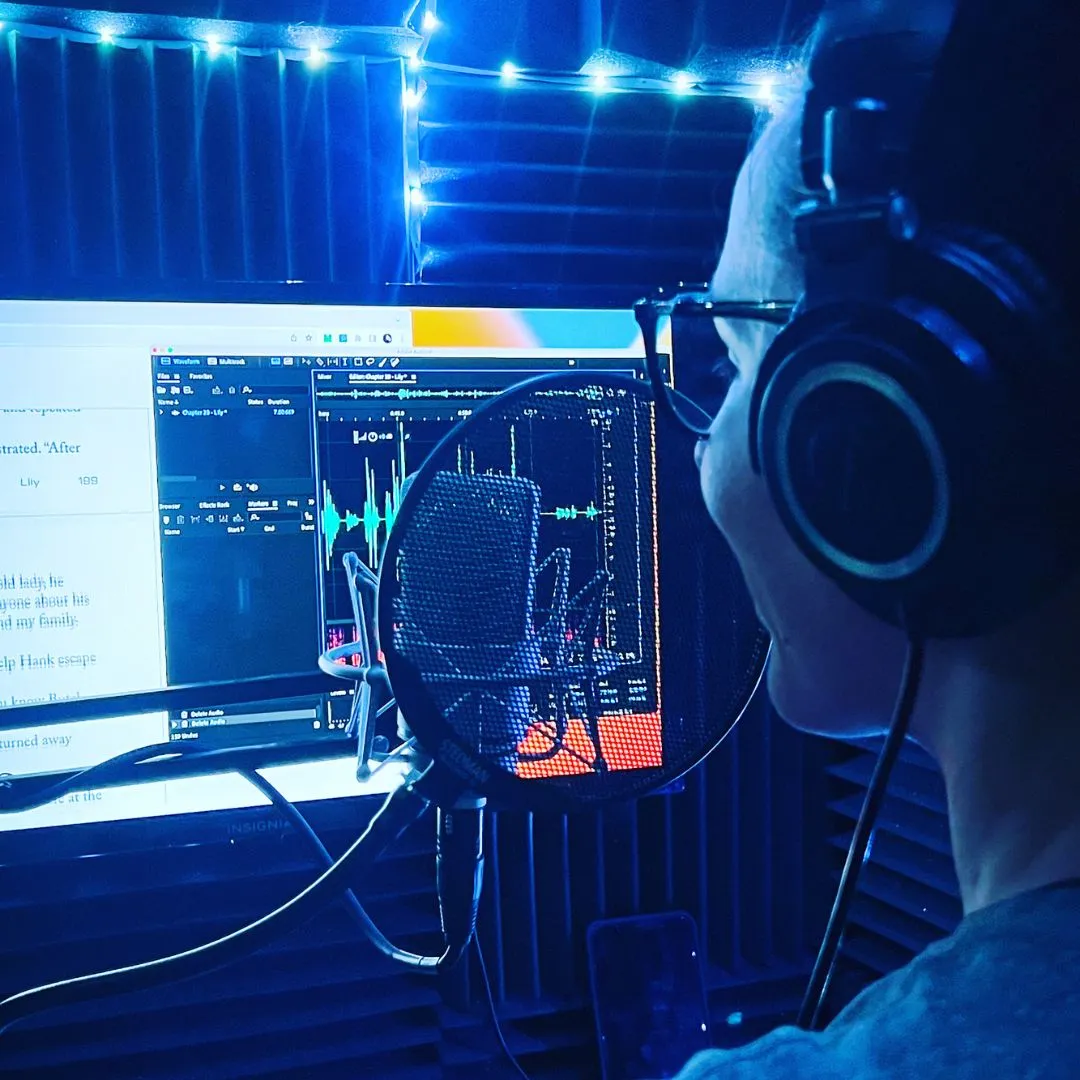
- A high-quality microphone – Neumann TLM 103
- An audio interface or preamp – RME Fireface 802
- Acoustic treatment – Whisper Room, Rocwool, Ceiling Clouds, Bass Traps
- Professional recording software – Adobe Audition
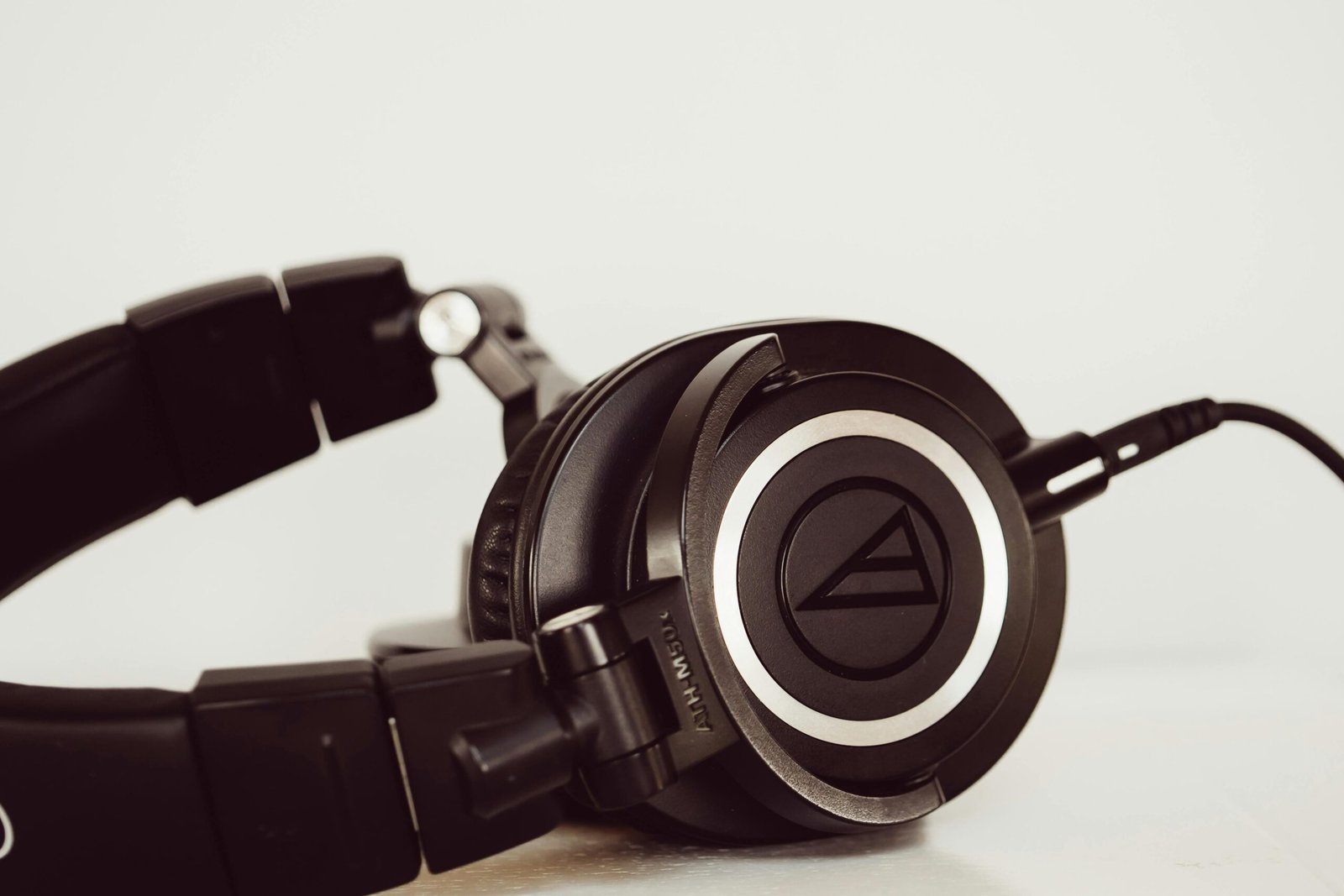
- Monitoring headphones – Audio-Technica ATH-MX50
- Reliable editing workflow
However, owning equipment is only part of the equation. A skilled remote voice actor also understands:
- Proper microphone technique
- Recording levels
- Gain staging
- Editing standards
- File formatting
- Audio cleanup
The goal is not simply to record audio. The goal is to deliver clean, dependable recordings that make life easier for producers and clients.
When hiring voice talent remotely, clients should listen for consistency and clarity rather than focusing only on gear lists.
3. Broadcast-Quality Audio Starts With Proper Gain Staging
One of the most overlooked technical elements in professional voiceover recording is gain staging.
If audio is recorded too loudly, distortion and clipping can occur. If it is recorded too quietly, unwanted noise may become more noticeable during editing and mastering.
Professional voice actors know how to maintain balanced recording levels that preserve clarity and dynamic range.
This helps create:
- Cleaner audio files
- More natural sound
- Better flexibility in post-production
- Reduced editing issues
Strong gain staging is one of the reasons professional studios sound polished and easy to work with. For clients, that means fewer revisions and a smoother production process overall.
Industry standards like the ACX Audio Submission Requirements are often used as a benchmark for broadcast-quality voice over audio, outlining expectations for noise floor, clarity, and overall recording consistency.
4. Clean Audio Should Still Sound Natural
One mistake newer voice actors sometimes make is over-processing their recordings. They want to make sure the client is getting audio that sounds good, but they don’t realize they are hurting the audio versus helping it.
Heavy compression, aggressive noise reduction, or excessive EQ can quickly make audio sound unnatural or distorted. In many cases, production teams actually prefer lightly processed audio that gives them flexibility during mixing.
Professional voice over recording should sound:
- Clear
- Balanced
- Warm
- Natural
- Authentic
Good editing often includes:
- Removing distracting mouth noise
- Cleaning up clicks or pops
- Trimming mistakes
- Maintaining consistent pacing
- Delivering organized files
A professional home voice over studio should deliver audio that feels polished without sounding artificial. It’s also important to understand that a professional voice talent will communicate clearly from the very beginning of a project. Depending on your needs, they will be able to adapt and deliver audio that meets your specifications and production requirements.
5. Consistency Is Critical for Long-Term Projects
Consistency is one of the most valuable qualities a remote voice actor can offer. Many clients need updates, pickups, or revisions weeks or even months after the original session. A professional home voice over studio should be capable of recreating the same sound consistently over time.
This includes maintaining:
- Similar microphone positioning
- Consistent room tone
- Stable recording settings
- Matching vocal energy and tone
Consistency becomes especially important for:
- eLearning courses
- Medical narration
- Corporate training
- Explainer videos
- Ongoing advertising campaigns
Reliable audio consistency helps projects feel seamless and professional from beginning to end.
6. Fast Turnaround and Organized File Delivery
Professionalism extends far beyond recording quality alone. Clients also need voice actors who can communicate clearly, deliver files correctly, and meet deadlines reliably.
A professional remote voice actor should be able to provide:
- Organized file naming
- Correct file formats
- Timely turnaround
- Easy file transfer
- Responsive communication
Depending on the project, clients may request:
- WAV files
- MP3 files
- Mono audio
- 24-bit recordings
- Specific sample rates
A strong workflow helps producers save time and avoid unnecessary technical corrections. In fast-paced industries like advertising and media production, reliability matters just as much as performance!
7. Live Directed Sessions Are Becoming the Industry Standard
More clients are requesting live remote recording sessions than ever before and a lot of professional voice actors like myself now offer live direction through:
- Source-Connect
- Zoom
- Google Meet
- Microsoft Teams
This allows producers and creative teams to:
- Give immediate feedback
- Adjust pacing or tone in real time
- Collaborate creatively
- Approve reads faster
A professional home voice over studio should support stable communication and dependable recording quality during live sessions. For brands and agencies working remotely across multiple locations, this flexibility is incredibly valuable.
8. Why Broadcast-Quality Audio Impacts Brand Perception
Audio quality influences how audiences perceive a brand.
Clean, polished recordings help content feel:
- Professional
- Trustworthy
- Engaging
- High quality
Poor audio, on the other hand, can unintentionally distract audiences from the message itself.
Whether creating:
- Commercials
- Social media campaigns
- Corporate narration
- Medical content
- Podcasts
- Television spots
- YouTube ads
- eLearning programs
…professional sound quality helps strengthen the overall production value.
That is why more companies are specifically searching for voice actors with a professional home voice over studio and reliable remote recording capabilities.
9. Choosing the Right Remote Voice Actor
When evaluating voice talent, clients should look beyond the demo reel alone. Once you decide who you would like to collaborate with, ask yourself some key questions before hiring them to voice your project.
Important questions include:
- Is the audio clean and professional?
- Does the recording space sound controlled?
- Can the actor deliver consistent quality?
- Are they easy to communicate with?
- Do they understand production workflows?
- Can they handle live direction professionally?
The best remote voice actors combine:
- Performance skill
- Technical knowledge
- Reliability
- Professional communication
- Broadcast-quality recording capability
A strong recording setup should support the creative process rather than create additional stress for the client.
10. A Professional Home Voice Over Studio Builds Client Confidence
At the end of the day, clients want confidence.
They want to know the voice actor they hire can:
- Deliver quality consistently
- Meet deadlines
- Provide clean audio
- Communicate professionally
- Represent their brand well
A professional home voice over studio is about much more than equipment alone. It reflects preparation, experience, technical understanding, and respect for the production process.
As remote recording continues to grow across the voice over industry, broadcast-quality audio has become essential for building trust with producers, agencies, and brands.
For clients, hiring a voice actor with a reliable studio setup can save time, reduce stress, and elevate the final product.
For voice actors, investing in professional recording quality helps create stronger long-term relationships and opens the door to higher-level opportunities.
If you are looking for a remote voice actor with a professional voice over recording studio and a commitment to broadcast-quality audio, feel free to explore my demos and studio specifications page to learn more. Talk with you soon!