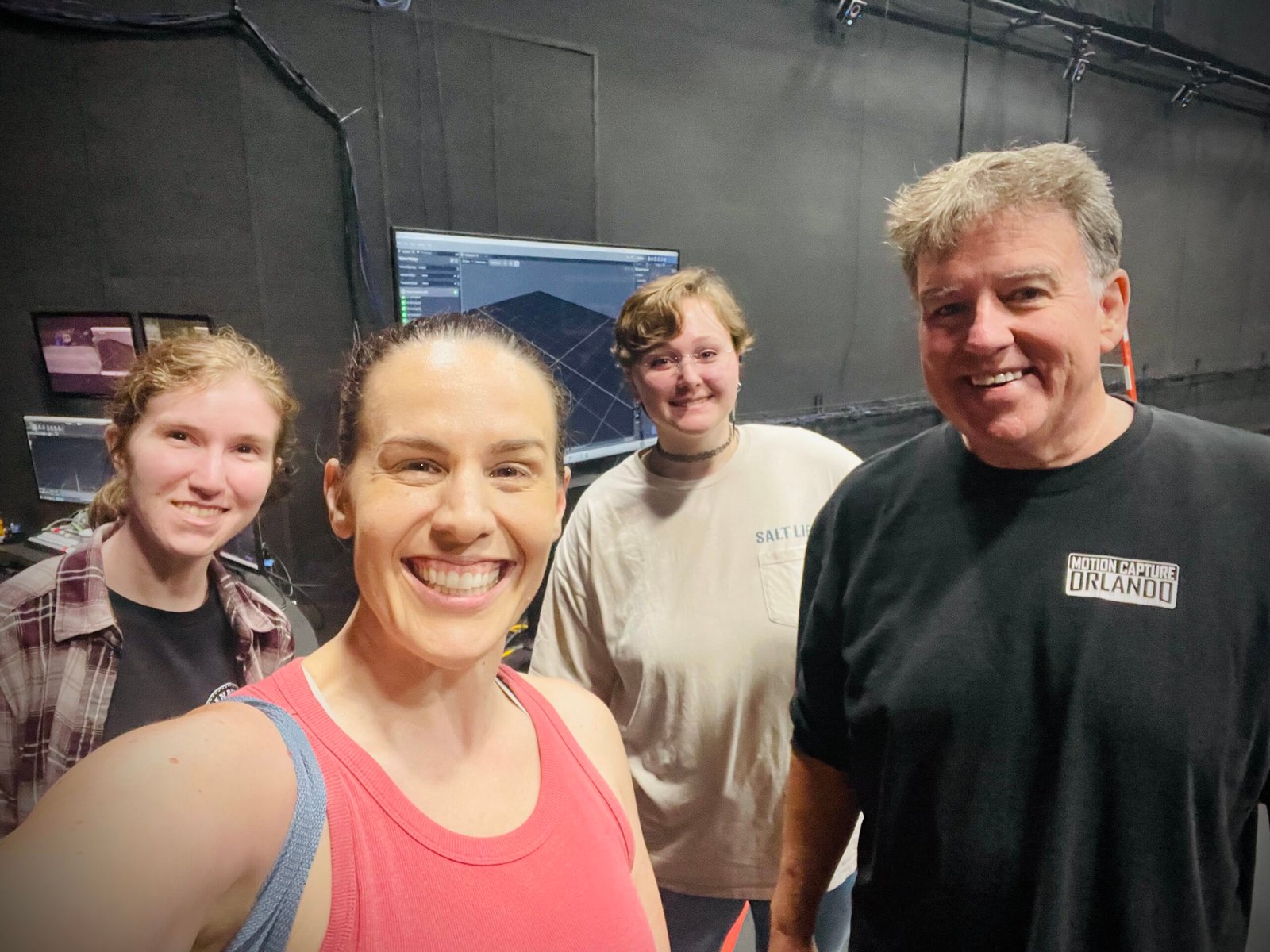
I recently had the opportunity to step back into a motion capture studio, and it reminded me why performance capture is one of my favorite forms of acting. While I can’t share details about this project just yet, I can share what it’s really like working as a motion capture actress behind the scenes.
While the details of this particular shoot are still under wraps, I wanted to use this moment to pull back the curtain a little on what it actually means to work as a motion capture actress, and why this side of my career matters just as much to me as anything I do behind a microphone or in front of a camera.
If you’re a studio, a director, or a producer trying to figure out what separates a genuinely trained performance capture actress from someone who just puts on a suit and hopes for the best, this one’s for you!
What Does a Motion Capture Actress Actually Do?
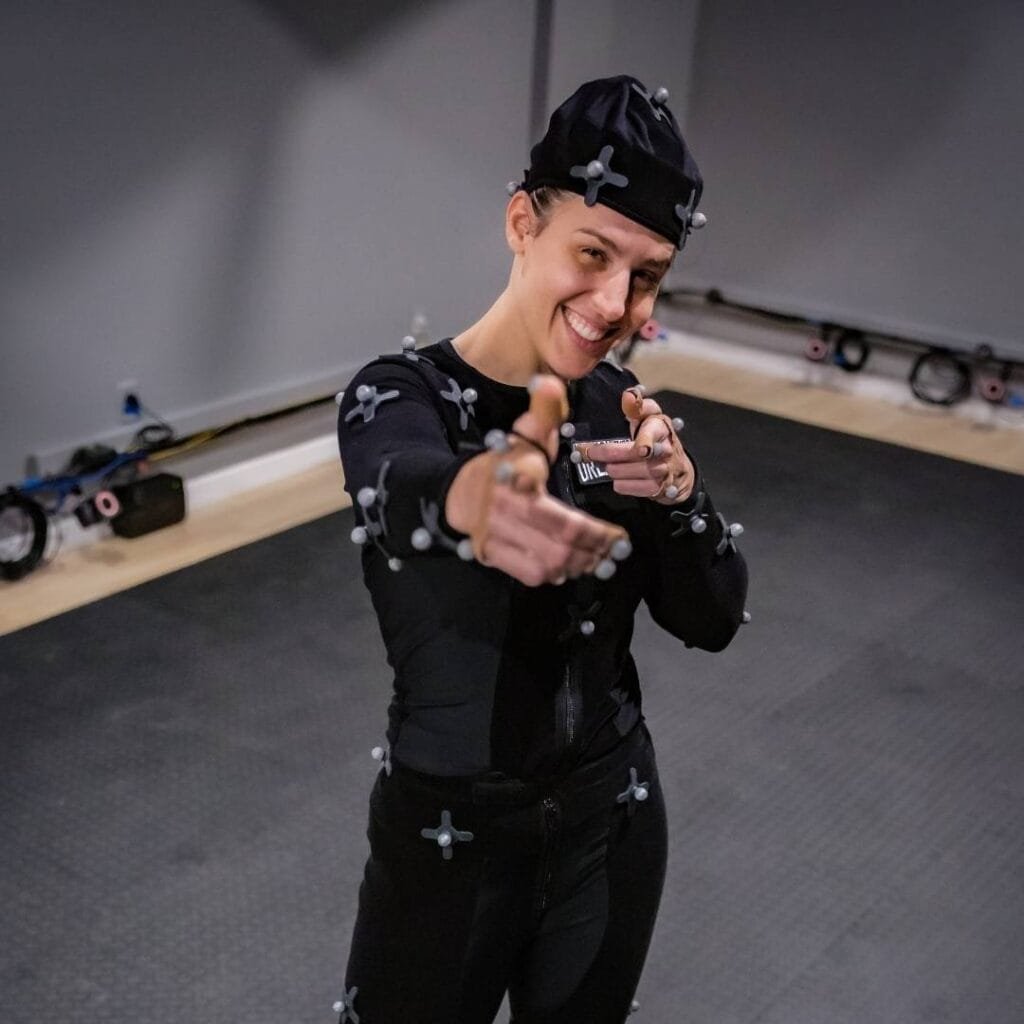
Motion capture, or mocap, is the process of recording a real performer’s movement and translating it onto a digital character, whether that’s a hero in a AAA video game, a creature in an animated film, or a fully realized character in a virtual production. The suit covered in reflective markers is the part everyone recognizes. What people don’t always realize is how much real acting happens underneath it.
A motion capture actress isn’t just providing raw movement data for an animator to clean up later. She’s making acting choices with her whole body: weight, posture, intention, and rhythm. Every flinch, every shift of balance, and every subtle hesitation before a line gets delivered becomes part of the character’s final performance. The suit disappears, and what’s left on screen is a translated version of a real, specific performance, which is exactly why the actress wearing it matters so much.
This is where a lot of productions run into trouble. Motion capture for video games and film often gets treated as a technical department problem instead of a performance problem. But the animators and riggers can only work with what the actor gives them. If the movement is stiff, generic, or disconnected from genuine character intention, no amount of technical polish afterward will fix it. That’s the entire reason performance capture actress casting deserves the same care as casting for any other role.
Why Physical Training Changes Everything in This Work
I bring a slightly different background into a mocap volume than most performers do. Alongside my work as a voice actor and on-camera actress, I’ve spent years training in performance capture, creature acting, and physical transformation, and I’m also an experienced underwater performer, someone who’s spent real time freediving, holding breath control, and moving with intention beneath the surface.
That combination shows up directly in how I approach a mocap stage. Underwater motion capture and creature performance both demand something a lot of trained actors never have to develop: full body awareness and control when your usual points of reference disappear.
When you can’t rely on facial expression alone, when your center of gravity shifts, when you’re moving as something that isn’t quite human, that training becomes the entire foundation of the performance.
This is also exactly why creature performance and physical transformation work is so specialized. Playing something non-human convincingly isn’t about exaggerated movement, it’s about finding real intention inside an unfamiliar physicality.
A trained performance capture actress with a background in movement, freediving, and physical storytelling brings something to that work that’s genuinely difficult to fake or teach quickly on set.
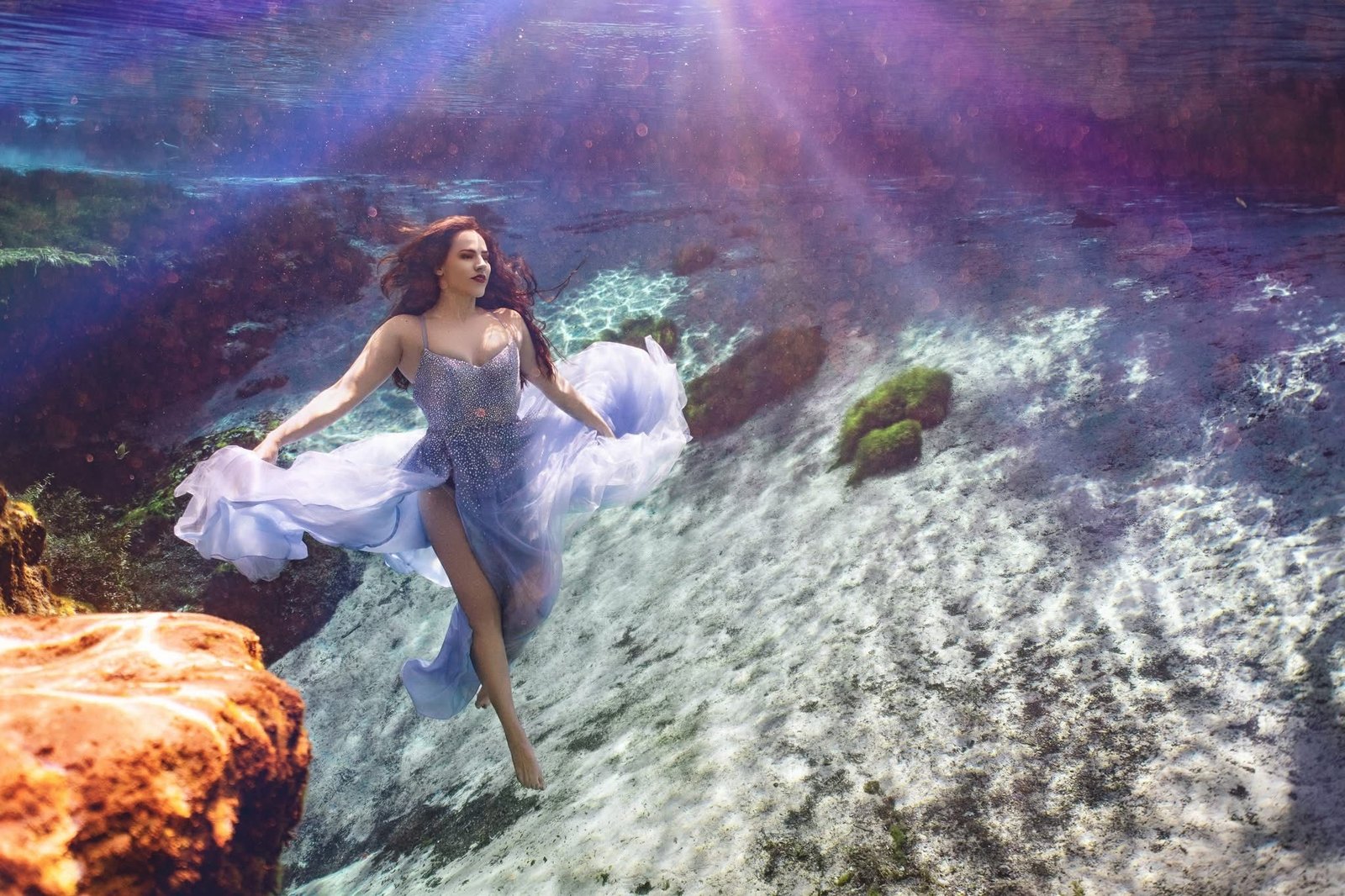
It’s also worth saying plainly: this is a skill set built over years, not something picked up in a single workshop before a shoot. Freediving alone requires real, ongoing physical conditioning, and pairing that with the discipline of creature acting and formal motion capture training is part of what makes this combination genuinely rare in the industry. Productions looking for a performer who can step into a volume already comfortable with all of it, rather than needing weeks of coaching first, are exactly who this kind of background is built for.
What Happens Behind the Scenes on a Mocap Stage
For anyone curious what a day in a motion capture volume actually looks like, here’s the honest version.
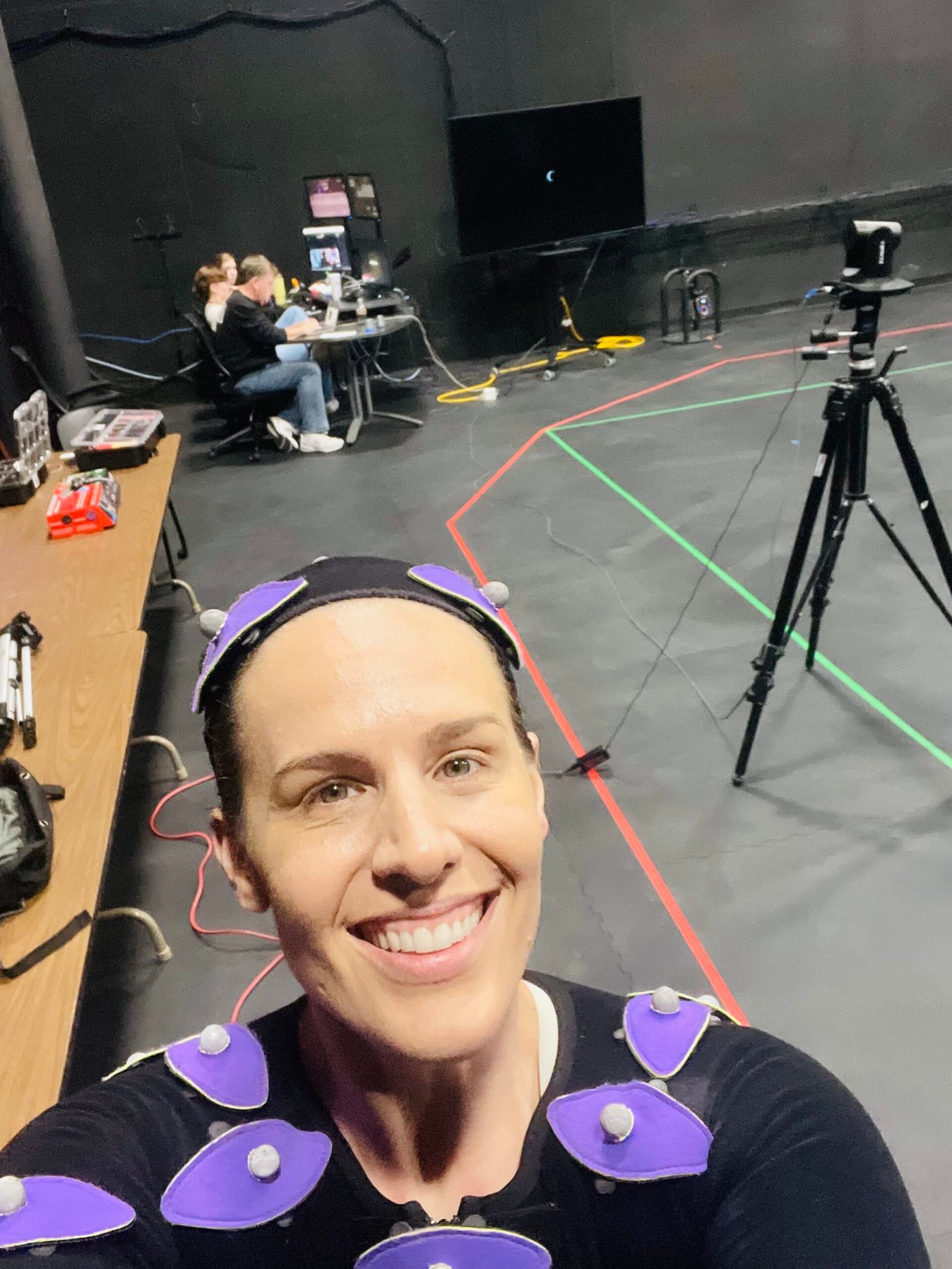
It starts with suiting up, and yes, the reflective markers really are attached individually, calibrated to the actor’s specific body proportions before a single take happens.
That calibration process alone can take a while, and it has to happen every single session, since even small changes in a marker’s position can throw off how the system reads a performer’s movement. Once the system is calibrated, the actual work looks a lot like any other rehearsal process: blocking, direction, adjustments, repetition.
The difference is that every take is being captured as raw movement data, meaning consistency matters enormously. If a character needs to hit a specific mark, reach for a specific object, or interact with another performer, that has to happen with real physical precision, since the animators building the final character are relying entirely on that captured motion.
There’s also a strange, specific skill to performing opposite props, environments, and other characters that simply aren’t there yet. A mocap volume is often just an empty space with a handful of markers taped to the floor indicating where a wall, a door, or another performer’s mark will eventually be. Reacting genuinely to something invisible, at the right distance, with the right timing, is its own trained skill, one that takes real repetition to get comfortable with.
Multiple takes, physicality profiles for different characters within the same shoot day, and quick adjustments based on director feedback are all completely normal. It’s demanding work, physically and creatively, but it’s also some of the most collaborative acting I get to do, since it happens in such close partnership with directors, technical animators, and often other performers in the same volume.
The Growing Demand for Skilled Performance Capture Talent
Motion capture and performance capture work has expanded well beyond big budget video games and blockbuster films. Independent game studios, animation houses, virtual production companies, and even training simulation developers are increasingly relying on real performance capture actresses instead of purely animated movement, since audiences and players can tell the difference almost instinctively. A hand-animated character can look technically smooth and still feel hollow. A character built from genuine captured performance carries something harder to fake: intention, weight, hesitation, all the small human details that make a digital character feel alive.
That growing demand means more productions, including smaller and mid-sized studios that might not have considered mocap financially realistic in the past, are looking for performers who can deliver strong, usable performance capture without requiring extensive in-house coaching first. That’s exactly the gap I’ve built my own training around closing.
Why Hiring the Right Performer for Mocap Actually Matters
If you’re a studio or production considering motion capture for video games, animation, or virtual production, here’s the honest pitch: the performer you cast for mocap work is not interchangeable with any trained actor. The specific combination of physical training, creature performance experience, and comfort working within the technical constraints of a capture volume is what separates a performance that requires heavy cleanup in post from one that lands close to final on the first pass.
I’ve built my performance capture and mocap experience specifically around that gap. Training under industry professionals in both motion capture technique and creature performance, alongside years of underwater and physical performance work, means I show up to a mocap stage already comfortable translating direction into movement other performers might need significant coaching to achieve. For productions working with tight schedules and real budget constraints, that difference in efficiency is worth genuine consideration during casting.
What’s Next
I’ll be sharing more details about this new mocap project as I’m able to, but for now, I wanted this update to be less about the project itself and more about the craft behind it. Motion capture, performance capture, and creature performance work are still widely misunderstood parts of the industry, and I think that’s worth talking about honestly, not just when I have a new credit to announce.
If you’re a director, producer, or studio working on a project that needs a performance capture actress with real physical training, creature performance experience, or underwater motion capture capability, I’d love to talk about how I can help bring your character to life. You can learn more about my performance capture and mocap work here, or reach out directly to discuss your project.
More updates soon. For now, I’m just grateful to be stepping back onto the stage.