
Voiceover rates 2026. That is one of the most searched and least clearly answered questions in the entire creative services industry.
You have a real project such as a commercial, an eLearning course, a medical narration, an explainer video. You know you need a professional voice actor.
You Google “how much does a voice actor cost”, and suddenly you’re drowning in numbers that range from $20 to $20,000 with absolutely nothing in between that makes any sense. Sound familiar?
You’re not alone. And honestly? The confusion is a problem, because when clients don’t understand voiceover rates, they either overpay, underpay, or hire the wrong person entirely. None of those outcomes serve your project.
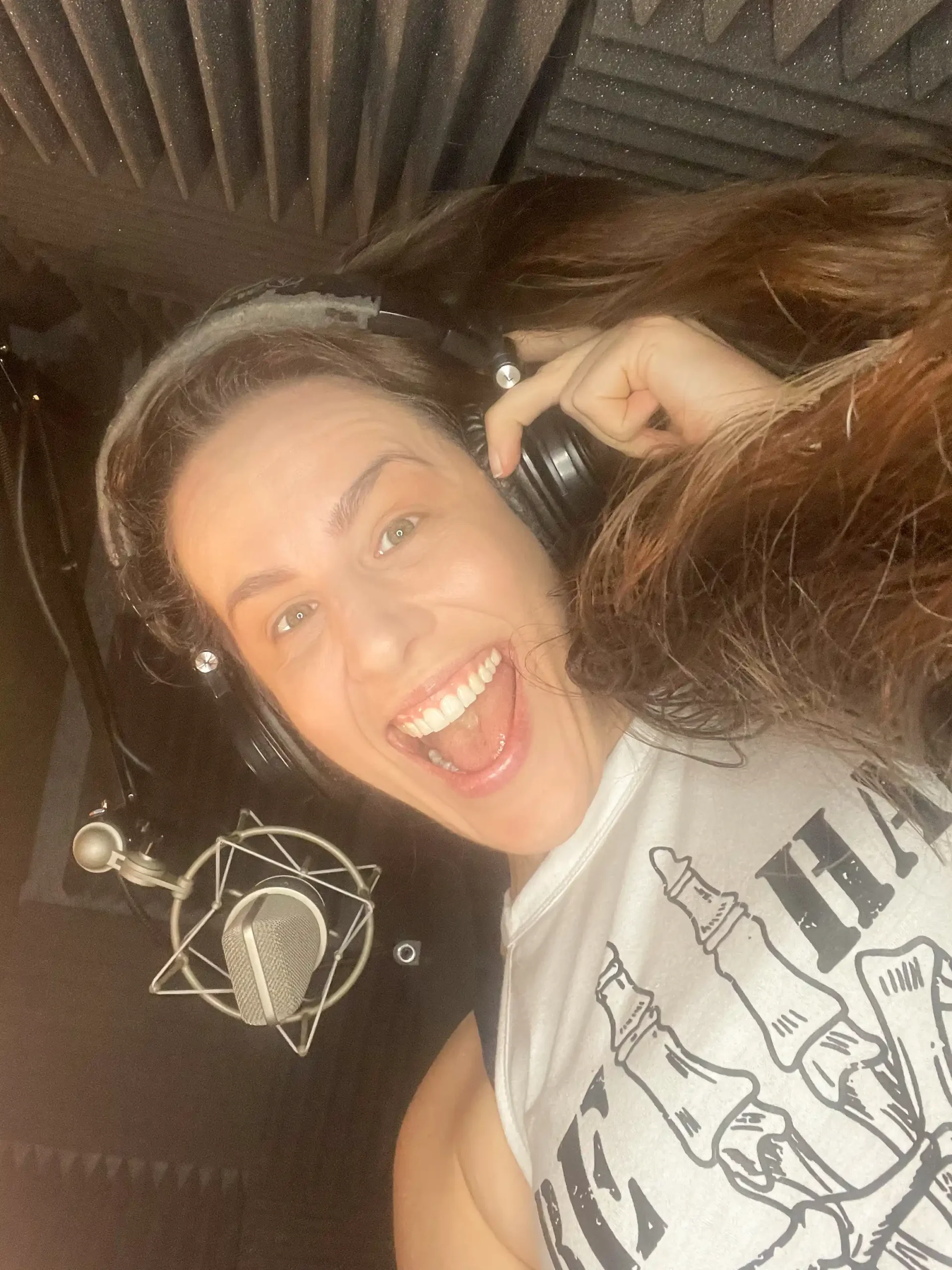
I’m Shannon Scott, a professional voice actor, actress, and founder of Simply Shannon Entertainment based in Florida. I’ve been in this industry long enough to know exactly why voiceover pricing feels so murky.
So today I’m clearing it up. No jargon or dancing around numbers. Just the honest, transparent breakdown every smart client deserves before they sign off on a single quote.
Let’s talk voiceover rates 2026. What they are, what drives them, and exactly what you should expect to pay.
Why Voiceover Rates Are All Over the Map
Before we get into numbers, it’s worth understanding why voiceover pricing varies so dramatically. Unlike a graphic designer who charges by the hour or a copywriter who charges by the word, voiceover rates 2026 are built on a combination of factors that most clients never see coming.
The four things that move the needle most:
1. Project type: A 30-second commercial and a 60-minute eLearning course are completely different animals. Different skill sets, different time commitments, different usage rights.
2. Usage and distribution: Where your audio lives changes everything. A video that plays internally at your company costs far less than a national TV campaign that airs to millions.
3. Experience level: A voice actor who has been working professionally for a decade brings something a beginner simply cannot: consistency, speed, and the ability to nail the tone you are asking for. That has real financial value when you’re on a deadline.
4. Buyout vs. usage fees: This is the one most clients miss entirely… and honestly, the one I feel most strongly about. Some quotes include a one-time buyout, meaning you pay once and own the audio forever.
That sounds appealing, but here’s what a buyout actually means for both of us: you are paying upfront for unlimited, perpetual use across every platform, every market, and every future application (including ones that don’t exist yet.) For a small internal training video? A buyout might make sense. For a national campaign, a brand identity voice, or anything with long-term commercial reach? A usage-based agreement protects you as much as it protects me.
It keeps costs proportional to how much value my voice is actually generating for your brand. A session fee plus usage rights tied to specific platforms and timeframes is almost always the fairer, more transparent structure, and I will always walk you through what that looks like for your specific project.
Now, the numbers for voiceover rates 2026…
Voiceover Rates 2026: The Real Breakdown by Project Type
Commercial Voiceover Rates
Commercial work is where voiceover pricing gets the widest range because usage matters enormously.
- Local radio spot: $150–$400
- Local cable TV: $225+
- Regional TV commercial: $500–$1,500
- National TV commercial: $975–$20,000+ depending on market reach and exclusivity
- Online/digital ad (non-broadcast): $250–$1,000
eLearning Voiceover Rates
eLearning is one of the fastest-growing voiceover markets right now, and one of the most misunderstood when it comes to pricing.
eLearning voiceover rates range from $180–$250 per finished minute for standard corporate content. Medical or technical eLearning with specialized terminology runs $220–$300 per finished minute. A typical 60-minute module can range from $10,800 to $18,000 at current GVAA standard rates, which reflects both the skill and the time investment required to deliver hours of consistent, engaging audio.
Most professional voice actors also have a minimum fee. So always be sure to inquire about what that might be when working with your chosen voice talent, so you can factor this into your budget from the start.
Medical Narration Voiceover Rates
Medical narration is a specialty category that commands higher rates, and for good reason. The voice actor must deliver complex terminology accurately, maintain a calm and authoritative tone throughout, and often work with content that requires real sensitivity.
Expect to pay $220–$300 per finished minute for experienced medical narration talent, reflecting the 2026 GVAA rate update that specifically recognizes the specialized skill required for technical and medical content.
Audiobook Narration Rates
Audiobook narration is priced per finished hour (PFH). Newer narrators charge $150 to $250 PFH, experienced professionals $250 to $500 PFH, and top-tier narrators $500 to $1,000+ PFH. An 80,000-word novel (roughly 9 finished hours), costs $2,500 to $5,000 at mid-range rates.
Audiobooks are a significant investment, but a well-narrated book is also one of the most powerful content assets you can own. Done right, it sells itself for years. It is also a lot of work for the talent: hours of recording in the booth and doubled editing time.
Character and Animation Voiceover Rates
Character work for video games, animation, apps, and interactive media, is priced by session, word count, or per character depending on the scope.
If you’re providing voiceover for cartoons and animation, the industry rates generally range from $100 for a short 15-second animation, all the way up to $10,000 for the starring role in an animated short.
For video game work, rates vary significantly based on the number of lines, characters voiced, and whether the project is indie or AAA. A strong character voice actor brings genuine acting ability to the booth (not just a funny voice), and that distinction shows up on screen every single time.
Corporate and IVR Voiceover Rates
Corporate narration, explainer videos, phone system recordings, and on-hold messaging typically fall in the range of:
- Corporate narration: $425 per finished hour
- Explainer video (2–3 minutes): $350–$700
- IVR / phone system (full menu tree): $300–$800
- On-hold messaging: $150–$400
These projects often have fast turnaround requirements — which is why working with a voice actor who has a professional home studio and can deliver broadcast-ready audio remotely is so valuable.
The Hidden Costs Nobody Talks About
Here’s what separates a quote that looks cheap from one that actually is:
Revision fees. Some platforms include one or two rounds of revisions. Others charge per revision.
Rush fees. Need audio in 24 hours? Expect to pay 25–50% more for rush delivery. Plan ahead and you’ll never pay this.
Exclusivity. If you need your voice actor to avoid working with your competitors, that’s a separate negotiation. Expect $5,000 to $25,000 per year for TV exclusivity, depending on category and market.
Usage renewals. If you’re not getting a full buyout, your usage rights have an expiration date. Know when it is.
What You’re Really Paying For
Here’s what I want every client to understand about professional voice actor rates 2026:
You are also paying for the studio. To work professionally from home, a voice actor needs a noise floor below -60dB ( a WhisperRoom or serious custom build.) You are paying for the studio engineer. The voice actor edits, declips, and delivers broadcast-ready audio. They are a production house of one.
When you hire a professional voice actor, you are not paying for someone to read words into a microphone. You are paying for:
- A broadcast-ready professional studio
- Years of training and performance experience
- Consistent, directed, emotionally intelligent delivery
- Technical audio editing and post-production
- Fast, reliable turnaround
- Rights to use the recording commercially
Remember: no two projects are the same, and a voice actor worth their rate will always give you a transparent, itemized quote before any work begins.
Why Cheap Voiceover Usually Costs More in the End
I know what you’re thinking. Fiverr exists. AI voice exists. Why not just use those?
Well, that’s true… You can find voiceover on Fiverr starting around $20–$30 for a short read. Some of those are decent, and most aren’t. The bigger issue: quality is inconsistent, ownership rights are often vague, and there’s no real vetting. You might get a great result on the first try. You might spend two weeks on revisions.
And AI voice? Synthetic platforms cost a fraction of human rates, and that gap is real.
But here’s what I need you to understand: a human voice carries nuance, warmth, and performance instinct that synthetic audio cannot replicate. More importantly, when you hire a human voice actor who operates with informed consent and clear contractual boundaries, you are protecting your brand from the legal and ethical gray areas that AI voice is increasingly creating.
I am a human voice actor. Which means that I perform AI-style voices for navigation systems, virtual assistants, digital characters with my real voice and real performance. But I do not consent to AI cloning or AI training usage of my recordings. Ever. That distinction matters for your project and for this industry.
How to Get an Accurate Quote
For most projects I follow the GVAA Rate Guide, which is the Global Voice Acting Academy’s industry standard pricing resource that’s widely respected across the professional voiceover community. It sets fair, transparent benchmarks for everything from commercial work to eLearning to character voice, so you know my quotes aren’t arbitrary.
They’re grounded in what the industry has collectively agreed is fair for both clients and talent. You can explore the guide yourself on the GVAA’s website. Aactually, I’d encourage it. An informed client makes for a better working relationship every single time.
Note: The GVAA Rate Guide was updated January 1, 2026 with an average 12% rate increase across major categories. So if you’re working from older quotes or estimates, it’s worth revisiting. With that said, there also could be changes in rates by the time I post this blog, so please always be sure to check the site for up-to-date rates for voice overs.
Every professional voice actor should be able to give you a clear, itemized quote based on:
- Project type and length
- Intended usage and distribution
- Turnaround time required
- Revision policy
- Buyout or usage fee structure
If a voice actor can’t answer all of those questions before quoting you, keep looking. Sometimes it can be confusing because there are a lot of factors that go into rates, but I promise this guide has the answers to fair rates for your voiceover talent.
If you’re ready to get a transparent, no-surprise quote for your project, I’d love to hear what you’re working on.
Ready to Hire a Professional Voice Actor?
Whether you need a warm, authoritative voice for medical narration, a clear and engaging tone for eLearning, a compelling character for your game or animation, or a polished commercial read that converts, I’m here and ready to bring your project to life.
Based in Florida with a broadcast-ready professional home studio, I work with clients worldwide via Source-Connect and deliver broadcast-ready audio with fast, reliable turnaround.
Request a Quote → Listen to My Demo Reel →
Shannon Scott is a professional voice actor, actress, and founder of Simply Shannon Entertainment based in Florida. She specializes in commercial, eLearning, medical narration, character, and human-performed AI-style voice work for clients worldwide.