
Performance capture acting is one of those areas of performance that can look completely different from the finished product.
You may see a digital character on screen, a creature moving through a fantastical world, or a video game character reacting with incredible emotion, but underneath that digital creation is often a real performer making very intentional choices.
That is what makes performance capture acting so fascinating to me. I’ve worked across acting, voiceover, underwater performance, motion capture, and physical character work, and I’ve learned that performance capture requires an actor to bring all of those skills together in a very unique way.
You’re still acting. You’re still telling a story. You’re still creating a character. But the environment around you may be almost completely different from what the audience eventually sees.
Instead of walking onto a traditional film set with a finished costume, elaborate scenery, and a physical creature standing across from you, you might step into a volume wearing a capture suit, work with markers or cameras, and rely heavily on your imagination, physicality, and connection to your scene partner.
And that’s where performance capture acting becomes so much more than simply recording movement.
What Is Performance Capture Acting?
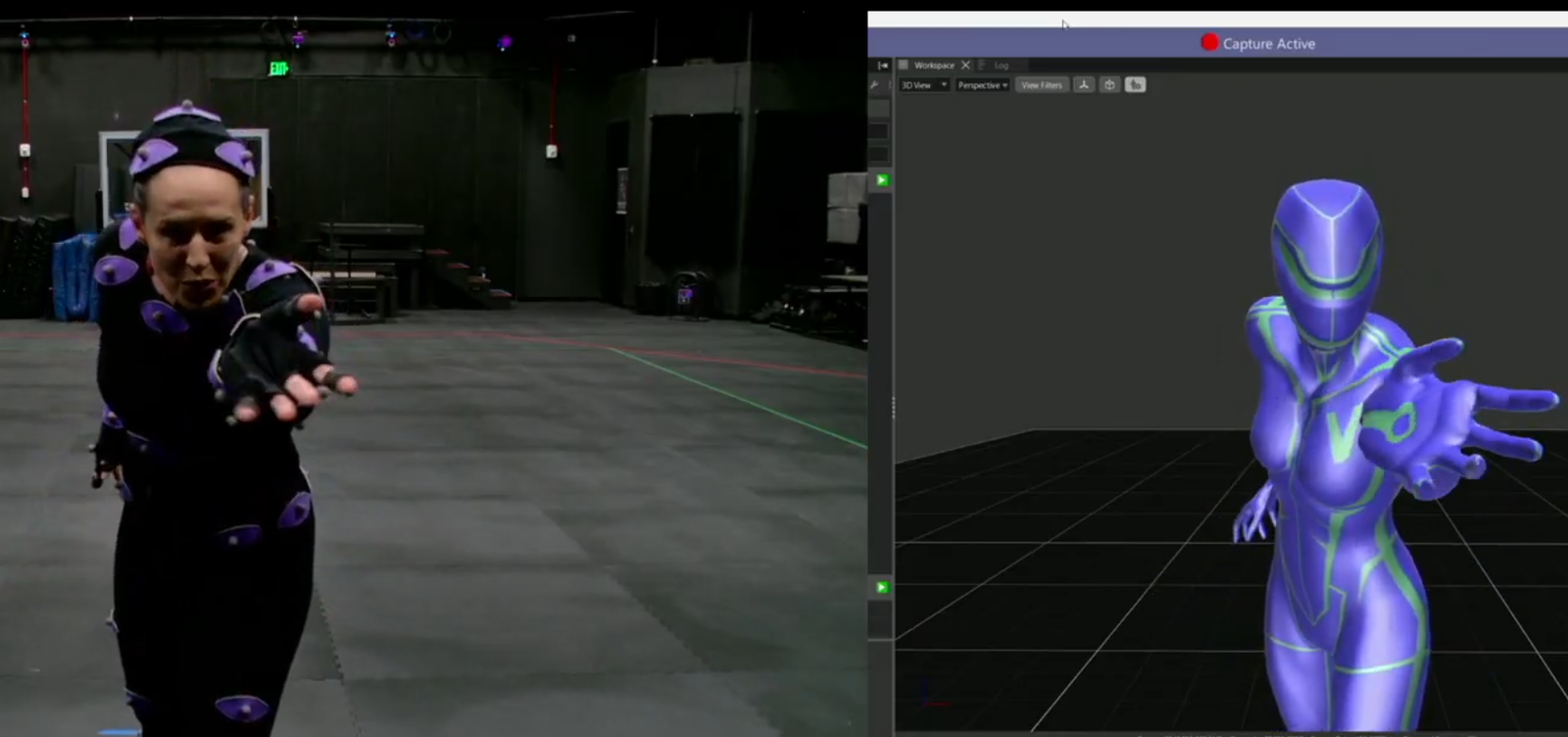
At its simplest, performance capture uses technology to record an actor’s performance and translate that information into a digital character. But performance capture can go much further than simply tracking where someone’s body moves.
Modern systems can capture body movement, facial expressions, hand movement, and other subtle details that help preserve the nuances of an actor’s performance. Epic Games describes performance capture as an extension of motion capture that can capture the more subtle aspects of an actor’s performance, including facial and hand movement.
That’s an important distinction. Motion capture is often used as a broad term for recording movement, while performance capture focuses on capturing the performance itself.
And according to SAG-AFTRA, performance capture has become an important part of film, television, video game, and other entertainment production. The organization also emphasizes that performance capture is skilled performance work, not simply a technical process. That’s exactly how I approach it!
I’m not just thinking about where my body needs to move… I’m thinking about the character and their intention. The emotion throughout the story, and the world I am supposed to believe I am a part of
1. Performance Capture Acting Starts With Acting
The technology may be different, but the foundation is still acting. This is one of the biggest misconceptions I encounter around performance capture acting. You don’t stop being an actor because you’re wearing a capture suit. If anything, the lack of traditional visual elements can require you to become even more committed to your performance.
You have to create a believable world in your imagination. You have to understand who your character is and what they want, and you have to respond truthfully to the other performers in the scene.
And you have to make choices that will still communicate when your physical appearance may eventually be replaced by a completely digital character. That is why my acting training is such an important part of my approach to performance capture.
Whether I’m performing a human character, a creature, a fantastical being, or something that doesn’t exist in the real world, I still start with the same question: Who is this character, and what are they experiencing right now?
The technology comes after the performance.
2. Your Body Becomes Part of the Story
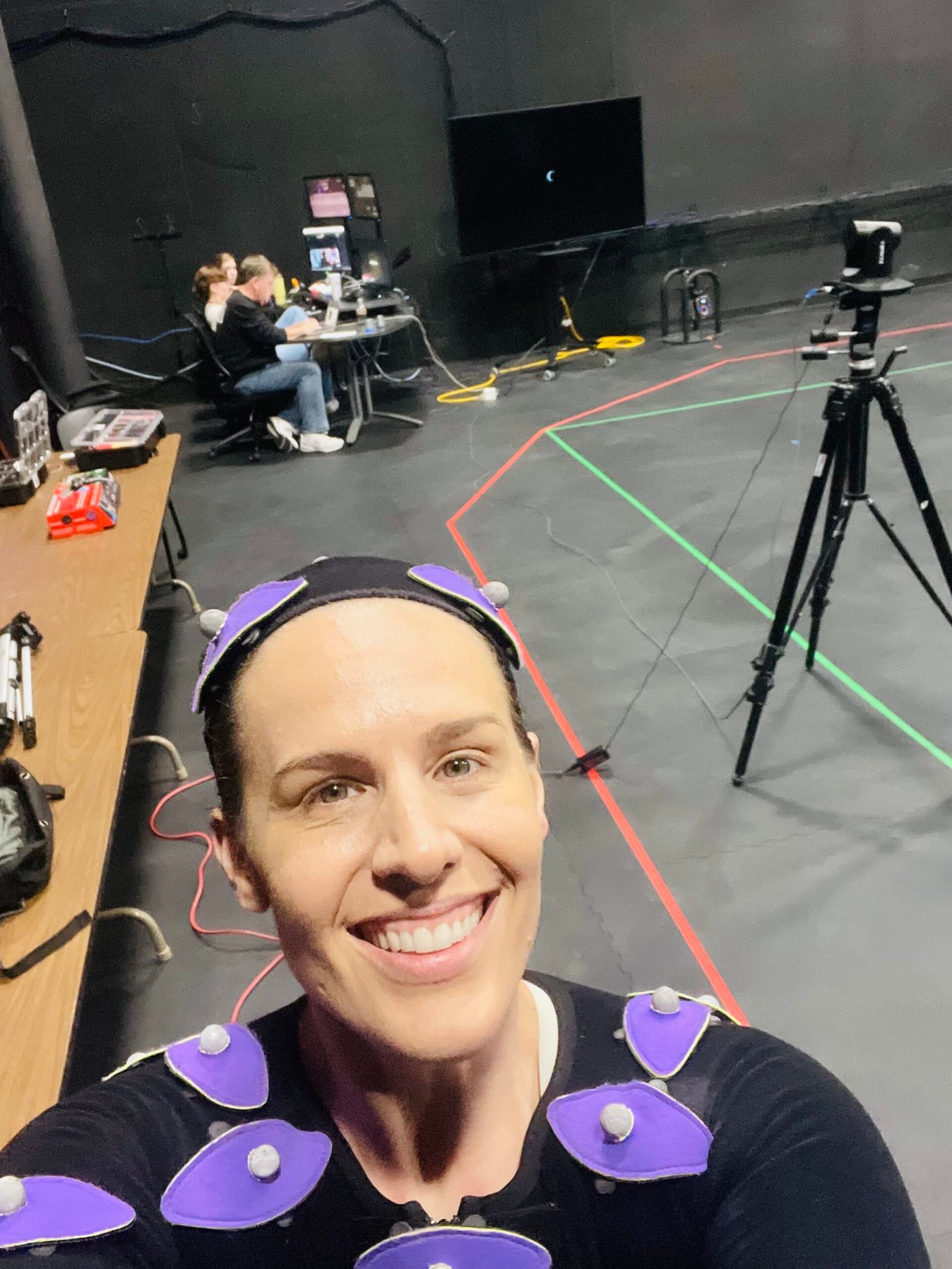
One of my favorite aspects of MOCAP acting is the physicality of it all.
Performance capture allows an actor to communicate through the entire body! A character’s posture can tell you whether they’re confident or afraid. The way they walk can tell you something about their personality, and a sudden movement can reveal fear, anger, excitement, or surprise. Those details matter.
SAG-AFTRA has noted that interactive performances can require actors to use their entire bodies to create nuanced character movement and that the sparse nature of many capture environments requires performers to rely heavily on imagination and improvisational skills.
That is one reason I enjoy physical performance so much. Being able to move and express the character through movement.
My background in underwater performance has taught me to be highly aware of my body, movement, breath, space, and physical storytelling. My experience with acting and creature performance adds another layer to that.
Different environments require different physical choices, but the fundamental skill will always stay the same: Use your body intentionally.
3. Imagination Is a Professional Skill
Imagine standing in a mostly empty volume. There may not be a finished spaceship around you, and there may not be a giant creature standing across from you. There may not even be a physical wall where your character believes one exists…
But you still have to react as though all of those things are real, and that’s where imagination becomes a professional skill.
Performance capture actors have to commit to environments that may exist only through descriptions, reference material, blocking, or the direction of the creative team. This isn’t pretending in the casual sense. It’s focused imagination at its fullest!
It’s the same skill actors use when they walk onto a stage and believe the audience isn’t sitting three feet away. It’s the same skill that allows me to perform as a mermaid underwater and completely commit to a world that doesn’t exist outside of the story we’re creating.
In performance capture, that imaginative commitment becomes part of the job.
4. Character Performance Matters More Than Looking Like the Character
One of the most exciting things about performance capture is that the actor doesn’t necessarily have to physically resemble the character they’re creating.
That’s particularly useful for video games, animation, fantasy projects, creatures, and digital characters. The actor’s job is to bring the character to life through performance.
That means a skilled performance capture actor can potentially play characters that are completely different from their own appearance, age, physical form, or species.
- The body becomes a storytelling instrument.
- The voice may become part of the performance.
- The facial expression may be captured.
- The movement may be retargeted onto a digital character.
And suddenly the actor’s performance can exist inside an entirely different body! And trust me, that’s incredibly exciting! It also means that casting for performance capture should focus on more than what someone looks like in a headshot.
Casting teams should be looking at acting ability, physical storytelling, adaptability, emotional range, movement quality, and the ability to take direction.
5. Facial Performance Can Change Everything
Performance capture isn’t only about big physical movements… Sometimes the smallest expression can carry the most emotional weight. A look, hesitation, a change in the eyes, or a subtle reaction to another character.
Those details can make a digital character feel alive!
Technology continues to evolve in this area. Epic Games’ current MetaHuman tools, for example, can capture facial and body performance and translate it into animation for digital characters.
That means actors need to understand that performance capture can involve multiple layers of performance. Your body, face, timing, and emotional choices all matter. And they also need to work together.
This is one reason I don’t view performance capture acting as a separate skill from traditional acting. I see it as another way to apply the craft
6. Creature Acting Requires Physical Commitment
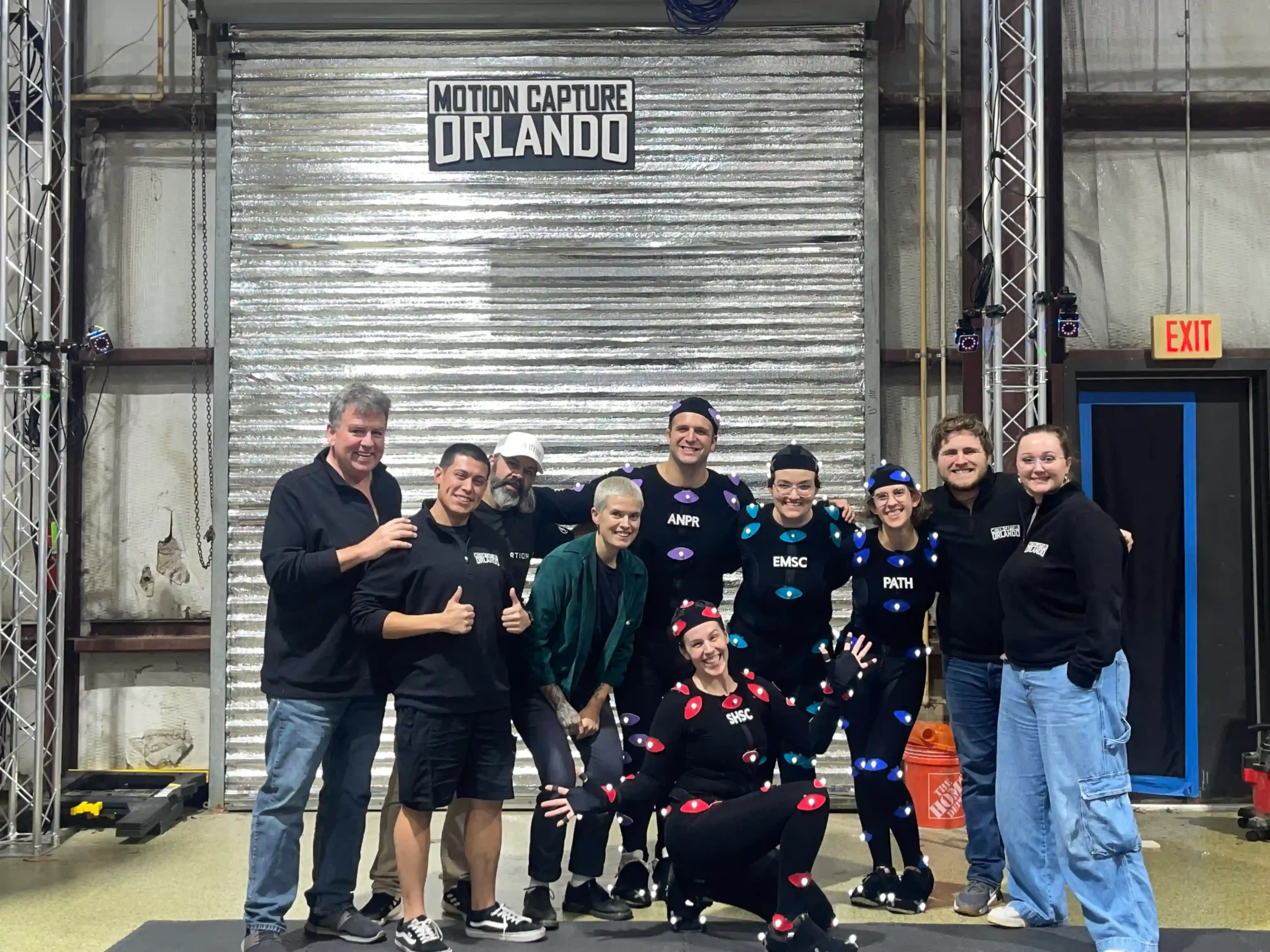
Creature performance is one of the areas of performance capture that I find especially exciting. When you’re portraying a creature, you may have to completely rethink how a character moves.
- Does it walk upright?
- Does it crawl?
- Does it lead with its head?
- How does it react when it’s threatened?
- How does it communicate without speaking?
- Does it move quickly or slowly?
- Is it predatory, playful, curious, graceful, awkward, or powerful?
Those choices become part of the character.
My background in underwater performance has given me a particular appreciation for this kind of physical storytelling because water already changes the way the human body moves. Underwater, I have to think differently about gravity, momentum, breath, positioning, and movement.
That same awareness can translate beautifully into creature and performance capture work.
I wrote more about that crossover between underwater performance and creature acting in my article, Creature Actor: Where Underwater Performance Meets Performance Capture, where I share how my underwater background has shaped the way I approach physical character work and performance capture.
The goal isn’t simply to move differently. The goal is to create a character whose movement makes sense!
7. The Best Performance Capture Actors Are Adaptable
If there is one quality I would encourage productions to look for when hiring a performance capture actor, it’s adaptability.
- Capture environments can change.
- Directors may want a different interpretation.
- A movement may need to be repeated.
- A character may need to become more aggressive, more subtle, more comedic, or more emotional.
- Technology may introduce its own challenges.
And sometimes the performance that looked perfect in rehearsal simply doesn’t work once everything is captured. A professional performer needs to be able to listen, adjust, and try again without losing the character.
That’s something I value deeply in my own work. I don’t expect the first choice to always be the final choice. Performance is collaborative, and you are a team from start to finish!
If a director says, “Let’s try it again, but this time make the character more guarded,” I want to understand what they’re asking for and give them another version. That’s also part of being a professional actor.
What Makes a Strong Performance Capture Actor?
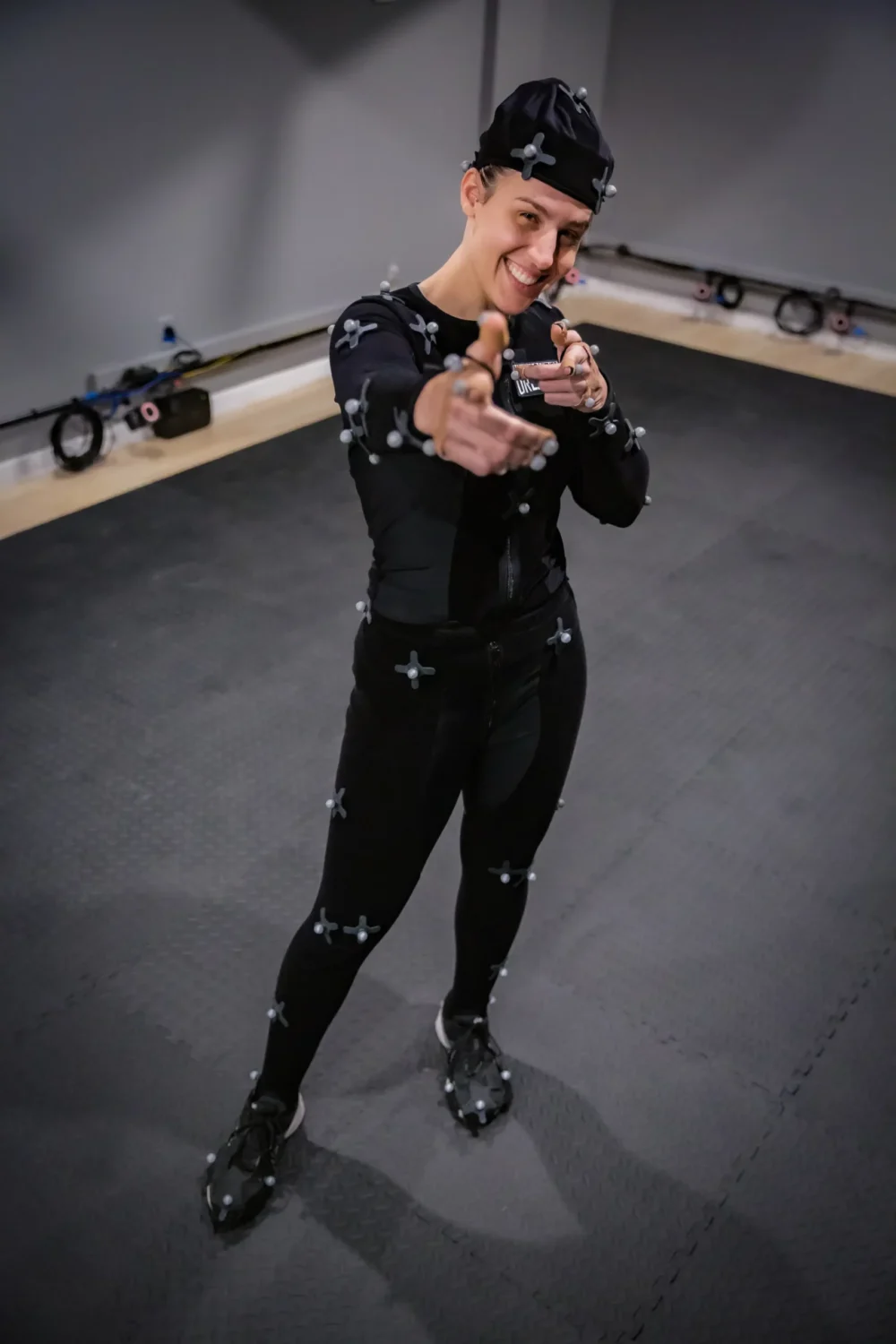
you’re a producer, casting director, game developer, director, or creative team looking for performance capture talent, I believe there are several qualities worth considering.
Look for someone who can:
- Create believable characters
- Take direction quickly
- Use their entire body expressively
- Understand physical storytelling
- Work comfortably in unfamiliar environments
- Commit to imagination and improvisation
- Repeat movement consistently when needed
- Adjust performance based on technical requirements
- Work collaboratively with directors and other performers
- Bring emotional depth to physical performance
- Understand that the technology supports the acting rather than replacing it
A capture suit doesn’t create a performance. An actor does. The technology records, translates, and helps transform that performance into something new.
Performance Capture, MOCAP, and the Future of Storytelling
The technology behind digital performance continues to evolve quickly.
We’re seeing advances in real-time capture, digital humans, facial animation, virtual production, and markerless systems. Epic’s current tools, for example, include systems capable of capturing full-body and facial performances and using those performances to animate digital characters.
For performers, that means the possibilities are expanding. For filmmakers and game developers, it means new storytelling possibilities. And for audiences, it means digital characters can become increasingly expressive and believable.
But even as the technology becomes more sophisticated, I don’t think the fundamental ingredient changes. Storytelling still begins with a performer making a choice. That’s why I’m excited about the future of performance capture.
Why I Love Performance Capture
I’ve always been drawn to forms of performance that allow me to become something different. That’s part of what originally drew me to acting. It’s also part of what drew me underwater and what makes creature performance so much fun.
And it’s one of the reasons I love performance capture acting! You’re given the opportunity to step outside of yourself and create something that may eventually look nothing like you.
You might become a creature, a warrior, a villain, a fantastical being, a digital human, or a character that hasn’t even been imagined yet.
And underneath all of that technology is still the same thing that has driven storytelling for thousands of years: A human being trying to communicate something meaningful to another human being.
Looking for a Performance Capture Actor?
If you’re a producer, director, casting professional, game studio, filmmaker, or creative team looking for a performance capture actor, I’d love to hear about your project.
My performance background includes acting, voiceover, physical performance, underwater work, creature performance, and motion capture. That combination allows me to approach performance capture from more than one angle and adapt to different characters, environments, and creative requirements.
I’m particularly interested in projects involving performance capture, MOCAP, creature acting, video games, film, animation, virtual production, and digital characters.
You can explore my Performance Capture & MOCAP services to see how I approach this work and learn more about the types of projects I can support.
You can also explore my acting portfolio and voiceover services to see the broader performance skills I bring to a project.
And if you’re interested in the behind-the-scenes side of my performance work, my MOCAP & Performance Capture category includes additional stories and insights from this part of my career.
For anyone interested in the technical side of performance capture, I also recommend exploring Epic Games’ Performance Capture resources and SAG-AFTRA’s resources on performance capture. They offer useful perspectives on how the technology and performance side of the industry continue to evolve.
Performance capture may use sophisticated technology, but at its heart, it’s still acting. It’s still character, emotion, and storytelling. And I would love to see what we can create together!