
I wish someone had sat me down years ago and explained what building a voice acting career would actually look like. Not just the microphone part, or the demo, or the auditions, but everything that happens around those things. I also wish someone had talked to me about learning how to trust my instincts, understanding what makes a performer memorable, figuring out how to handle rejection, and realizing that being visible is not something you do only when you have something to sell.
I have spent years working as an actor and voice actor, and my voice acting career has taken me into some pretty unexpected places. I have worked in commercials, medical narration, eLearning, animation, video games, audiobooks, performance capture, underwater performance, and other forms of storytelling.
None of it happened in a perfectly straight line, and looking back, I think that is one of the most valuable things about the journey.
Every project has taught me something. Some lessons came through wonderful experiences, while others took years of trial and error to understand. There are still things I am learning today, but these are seven lessons I wish I had known much earlier in my voice acting career.

1. It Is Not About How “Good” You Sound. It Is About How You Serve the Story.
For a long time, I thought building a successful voice acting career meant sounding good. I wanted the right tone, the right pacing, the right inflection, and the right sound. I wanted to sound polished and professional, and I spent a lot of time thinking about whether I was delivering a line the way I thought a voice actor was supposed to deliver it.
Eventually, I realized I was asking the wrong question…
Instead of asking myself, “How do I sound?” I started asking, “How can I serve this story?” That question changed the way I approach a script. It shifted my attention away from myself and toward the person listening, the message being communicated, and the reason the words exist in the first place.
Who am I talking to? What does this person need to understand? What should they feel? Why does this moment matter? What does the character want? What is underneath the words? Once I started thinking about those things, I stopped trying so hard to perform the script and started trying to communicate it.
That shift matters because every project asks something different from the performer. A medical narration may need to feel trustworthy, warm, and human. An eLearning project might need to make complicated information feel approachable and easy to follow. A commercial could need humor, confidence, intimacy, excitement, or energy. An animated character may require an entirely different physical and emotional approach.
The microphone is simply the tool. The performance is still storytelling. And that is one of the reasons I believe my acting background has become such an important part of my voiceover career. I am not simply reading words into a microphone. I am trying to understand the person, message, or character behind those words and find the most honest way to bring them to life.
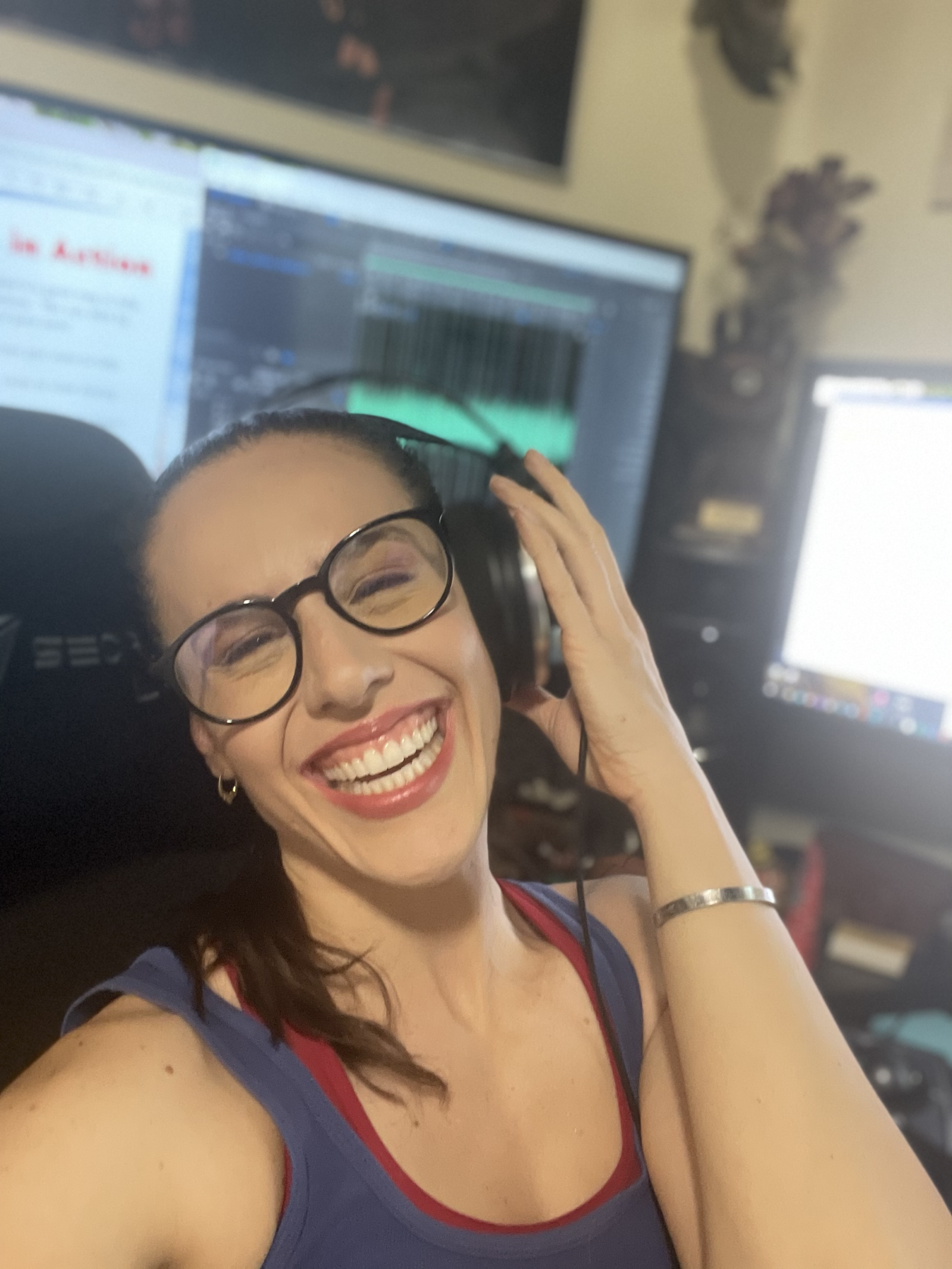
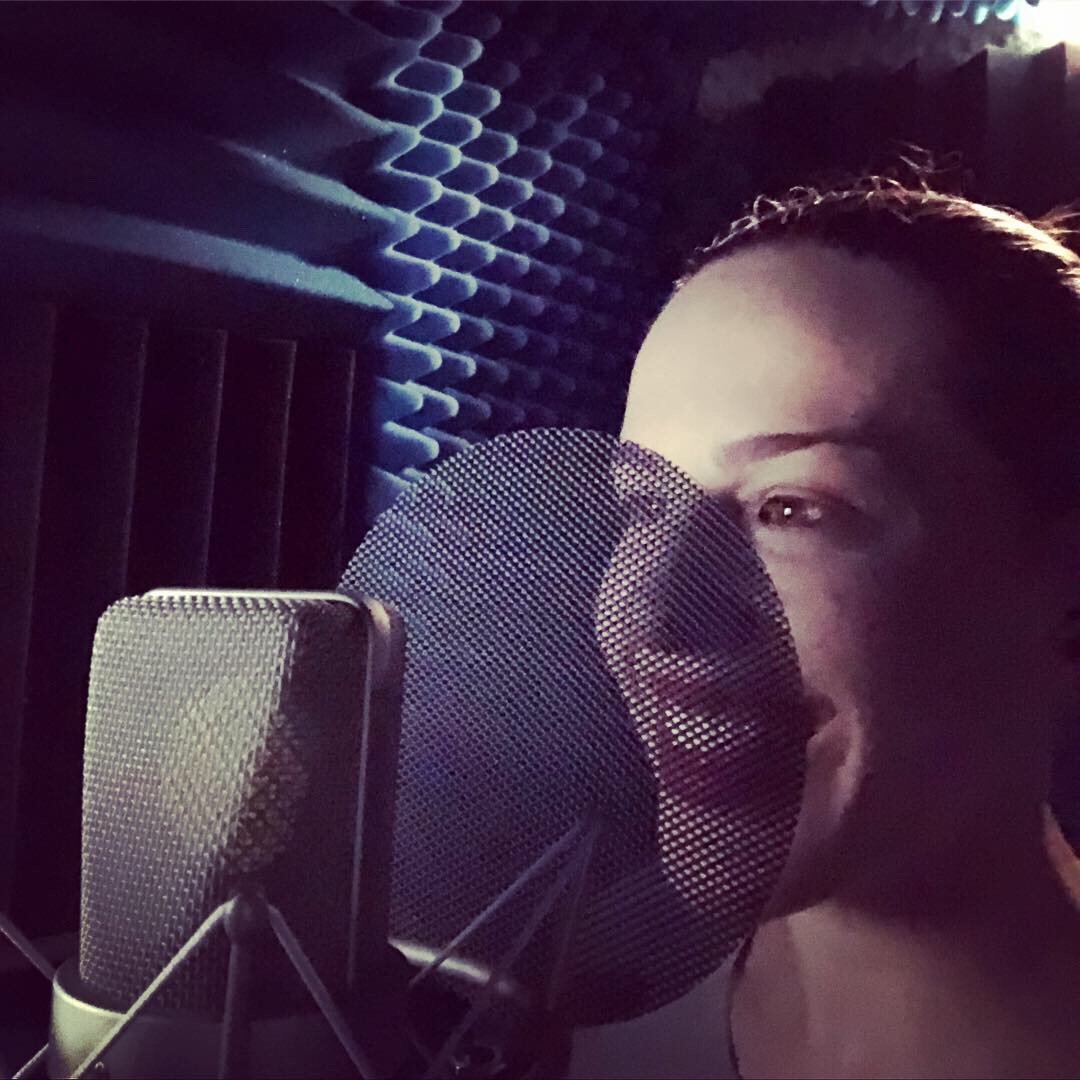
I recently wrote more about this in Behind the Scenes in My Professional Voiceover Studio, where I talk about what happens before I ever press record and why understanding the heart of a script is such an important part of the process. A professional recording space can capture a clean performance, but it is the performer who creates the connection.
The goal is not to sound impressive, but to make someone feel, understand, remember, or believe something. Once I understood that, I stopped trying so hard to “sound like a voice actor.” I started trying to be a storyteller. That was a much better place to work from.

2. You Do Not Have to Fit Into One Little Box.
There is a lot of pressure in entertainment to figure out exactly what you are. Are you an actor? A voice actor? A narrator? A commercial performer? A character actor? A performance capture artist?
The advice to “choose your lane” can be useful, especially when you are trying to make it easy for people to understand what you do, but I have also learned that having multiple disciplines does not automatically mean your voice acting career is unfocused. Sometimes it means you have more tools.
My voiceover career has grown alongside my acting career, performance capture work, underwater performance, and other forms of physical storytelling. Those experiences do not compete with one another. They inform one another. When I step behind a microphone, I bring my acting experience with me. When I work in performance capture, I bring years of physical performance and character work into the volume. When I perform underwater, I rely on intention, timing, emotional connection, physical awareness, and the ability to stay present under challenging conditions.
My work in performance capture and motion capture is a great example of this overlap. Performance capture requires an actor to think about the character emotionally while also thinking physically about movement, timing, marks, and how the performance will ultimately translate into a digital world. My underwater experience brings another layer to that work because I have spent years learning how to communicate physically while managing breath, movement, and an environment that behaves completely differently from the one we experience on land.
Even the stranger parts of my career have taught me something useful.
For a long time, I wondered whether having so many different experiences made me harder to categorize. Now I see it differently. The unusual combination of skills you have may be exactly what makes someone remember you.
You do not necessarily have to erase the things that make your career different in order to make yourself marketable. Sometimes those differences are the most valuable part of what you bring into the room.
3. Visibility Is Part of the Job.
This is probably one of the biggest lessons I wish I had learned sooner…
For years, I thought about marketing as something I needed to do when I had something to sell. My question was, “What do I have to market today?” That question made marketing feel like another task on an already long list, and it also made it very easy to disappear whenever I did not have a booking, a new demo, or some exciting announcement to share.
Recently, I have been trying to rewire that question. Instead of asking, “What do I have to market today?” I am asking, “How do I stay visible today?” That simple shift may sound small, but it has changed the way I think about my career and social media.
Visibility does not always mean asking someone to hire you. Sometimes it means sharing something you learned. Sometimes it means talking about a project you are working on, showing a little behind the scenes, connecting with another creative, commenting thoughtfully on someone else’s work, updating your website, writing a blog, sharing a performance, or simply allowing people to see what you are currently doing.
The goal is not to spend every day shouting, “Hire me!” The goal is to give people the opportunity to remember that you exist.
And I have seen the impact of that shift firsthand. Recently, from simply making a conscious effort to stay visible and show up consistently, I have booked an animation project and two medical projects. I cannot pretend that every post or every interaction magically turns into a job, because that is not how this industry works. What I can say is that if I had been invisible, those opportunities would have had a much harder time finding me.
That realization has changed the way I look at marketing my voice acting career.
I do not want to appear only when I have something to announce. I want people to see the work, the process, the person behind the work, and the things I am excited about while I am actually building my voice acting career.
That does not mean you have to be online all day. It means you have to give people enough opportunities to remember what you do and what makes you different.
I wish I had understood this years ago. You cannot be chosen if you cannot be seen!
That applies to actors, voice actors, photographers, writers, filmmakers, musicians, artists, and just about anyone trying to build a creative career. Being visible is not the same thing as bragging, it’s just making it possible for the right people to discover you.
4. Your Job Is Not to Prove That You Are Good Enough.
Auditions can mess with your head. You prepare, research, make choices, record the audition, send it away, and then wait. It is incredibly easy to start believing that every audition is a test of whether you are talented enough, professional enough, interesting enough, or worthy enough to have a career.
But casting does not work that way…
Sometimes you are exactly what the casting team needs. Sometimes you are not. Sometimes another performer happens to have the exact sound, look, energy, age, experience, or quality that fits the director’s vision. Sometimes the project changes, the budget disappears, the role gets rewritten, or the production never happens at all. There are so many variables involved in casting that have absolutely nothing to do with whether you are talented.
I have written about this from the acting side in 7 Powerful Ways to Build Actor Confidence Between Auditions, because the time between opportunities can be one of the hardest parts of a creative career. When there is no immediate result to point to, it is easy to assume that nothing is happening or that everyone else is moving forward while you are standing still.
Your job is to prepare, make strong choices, tell the story, and give the casting team something real to respond to. Once you have done that, the decision belongs to them. Now, that does not make rejection fun, but it does make it easier to stop treating every “no” as evidence that something is wrong with you.
I have learned to think about auditions less as an opportunity to prove myself and more as an opportunity to show what I would bring to the story. That mindset has become an important part of how I approach my voice acting career. And that is a much healthier place to create from!
5. You Do Not Need to Become Someone Else to Be Cast.
This lesson goes deeper than auditioning. As performers, we are constantly encouraged to improve ourselves, and there is absolutely nothing wrong with growth. Training matters, coaching matters, better materials matter, updating your demos matters, and learning new skills matters. I am still training and learning myself, and I expect I always will be.
The problem comes when improvement quietly turns into the belief that the person you are right now is not enough.
It is easy to think that the next class, the next demo, the next headshot session, the next piece of equipment, or the next certification will finally make you feel ready. Sometimes we convince ourselves that we need to become a better version of ourselves before we are allowed to fully show up as the person we already are.
I have had to unlearn that. I can continue improving without believing that I have to become someone else to be worthy of the opportunity. I can work on my craft while still trusting that the person standing here today has something valuable to offer.
That is part of why keeping your materials current matters so much. Your voiceover demos should reflect the performer you are now and the kinds of stories you are ready to tell. That is an important part of maintaining a professional voice acting career because your materials should help people recognize where you fit. The same is true of your website, your headshots, your reels, and the way you introduce yourself to people in the industry.
I recently wrote about this from the visual side in Why Professional Headshots Are One of the Best Investments an Actor Can Make. Your materials are not supposed to prove that you have finally become perfect. They are supposed to help people recognize you.
There is a difference. You can keep learning while also letting yourself be seen.
6. Your Career Is Being Built in the Spaces Between the Bookings.
We tend to measure a voice acting career by the visible moments. We booked the role. We got the callback. We released the project. We premiered the film. We landed the commercial. We signed with someone. We got the email we had been hoping for. Yay!
Those moments are all important, but they are only a small part of the actual work.
A voice acting career is also built in the quiet spaces between those moments. It is built when you take a class, study a script, update your demo, reach out to a production company, make a new connection, audition for something that feels like a long shot, write an article, create a video, practice a skill, or spend time figuring out what kind of performer you actually want to be.
Sometimes it is built when you help another artist. Sometimes it is built when you make something simply because you want to make it, and other times it is built when you decide not to disappear just because things are quiet.
That last one has become especially important to me. I used to think that a slow season meant I needed to wait until something happened before I had something worth sharing. Now I see those seasons as an opportunity to keep building the foundation underneath the next opportunity.
That might mean working on my voiceover portfolio. It might mean creating new content. It might mean learning something new about performance capture. It might mean connecting with people whose work I admire. It might mean showing up online even when I do not have a booking announcement.
All of those things count! They may not produce an immediate result, but they are still part of building a career.
7. We Are Always Perfectly Cast.
This may be the hardest lesson for me to explain because it is not really a marketing strategy or an audition technique. It is more of a belief I have come to hold about this career.
I don’t mean that every role you audition for is secretly meant for you or that you should stop working toward the opportunities you want. I mean that there is freedom in trusting that you do not have to be right for everything in order to have a successful career.
We can spend so much energy trying to convince people to choose us. We try to sound more impressive, look more marketable, become more versatile, or figure out exactly what we think casting wants. Sometimes we lose sight of the fact that casting is supposed to be about finding the right person for a particular story.
- What if your job is not to be right for everything?
- What if your job is to be exactly right for the things that are right for you?
That does not mean sitting around waiting for opportunities to appear. You still have to train, audition, network, create, market yourself, and stay visible. You still have to put yourself in the room.
But once you are there, you do not have to become someone else to deserve the opportunity. You get to bring yourself. You get to make your choices. And most importantly, you get to tell the story.
I never could have predicted that my career would eventually include voiceover, film, television, performance capture, underwater modeling, freediving, mermaid performance, medical narration, animation, and all of the strange little corners of performance I have wandered into along the way.
But here we are, and I would not trade the weirdness for anything.
What I Wish I Had Known When I Started
If I could go back and talk to the version of myself who was just beginning to figure out what a voice acting career could look like, I would tell her that she did not need to spend so much time worrying about whether she sounded good enough. I would tell her to stop trying to perform what she thought a voice actor was supposed to sound like and start asking a much more useful question: How can I serve this story?
I would tell her that she did not need to fit neatly into one category, either. The acting, the voiceover, the performance capture, the underwater work, and all of the other experiences were not competing pieces of a career. They were pieces of the same storyteller.
Most of all, I would tell her to understand the power of being seen.
I would tell her that marketing does not have to mean waking up every morning and asking, “What do I have to sell today?” It can mean asking, “How can I stay visible today?” There is a huge difference between constantly trying to sell yourself and simply giving people opportunities to know what you do.
That shift has changed the way I approach my own voice acting career, and I am still learning how powerful it can be. Because the truth is, I do not know which audition, conversation, email, photograph, blog post, video, connection, or random moment will eventually lead somewhere.
That is part of what makes this career so exciting!
Keep learning. Keep telling stories. Keep showing up, and keep letting people see you. When the right opportunity comes along, stop worrying so much about whether you sound good enough and ask yourself how you can serve the story in front of you. Everything else has a way of falling into place.
Maybe we are not supposed to become the perfect performer. Maybe we are simply supposed to become more fully ourselves. And maybe, in the end, we are always perfectly cast.
Keep Exploring
If you are interested in the craft and business of voiceover, you can also take a look at what happens inside my professional voiceover studio, explore my voiceover demos and portfolio, or learn more about my approach to performance capture and motion capture. If you are an actor navigating the emotional side of the industry, 7 Powerful Ways to Build Actor Confidence Between Auditions is another place to start.

For performers who are building a professional career, it is also worth knowing where to find reliable industry resources. SAG-AFTRA provides information for union performers about contracts, rates, industry resources, and different areas of entertainment work. The SAG-AFTRA Foundation also provides educational programming and professional development opportunities for performers.
For remote voiceover work, Source-Connect is one of the professional tools used to connect voice talent with clients and production teams for live-directed recording sessions.
And if you are looking for a professional voice actor for your next project, you can explore my voiceover work or request a voiceover quote. I would love to help tell your story!