
The performer mindset is usually running on maximum overdrive. We are constantly learning lines, preparing auditions, recording voiceovers, stepping onto sets, rehearsing, networking, creating, waiting for callbacks, and wondering what comes next. That is why it is so important that we creatives never lose sight of the simple things that can help us keep going.
Being a performer is full of incredible highs, but it can also come with an overwhelming number of lows. One moment you are stepping onto a stage, recording a voiceover session, or bringing a character to life on set. The next, you may be waiting for a callback and searching for your next opportunity.
Anyone who works in the performing arts understands that this career requires more than talent. It takes persistence, resilience, adaptability, professionalism, and a deep love for storytelling. If your only goal is fame and fortune, you are probably heading down the wrong path.
But there is another piece of the puzzle that we don’t always talk about: how we show up.
Your performer mindset can influence how you approach auditions, how you handle rejection, how you work with other people, and how you navigate the unpredictable nature of an entertainment career.
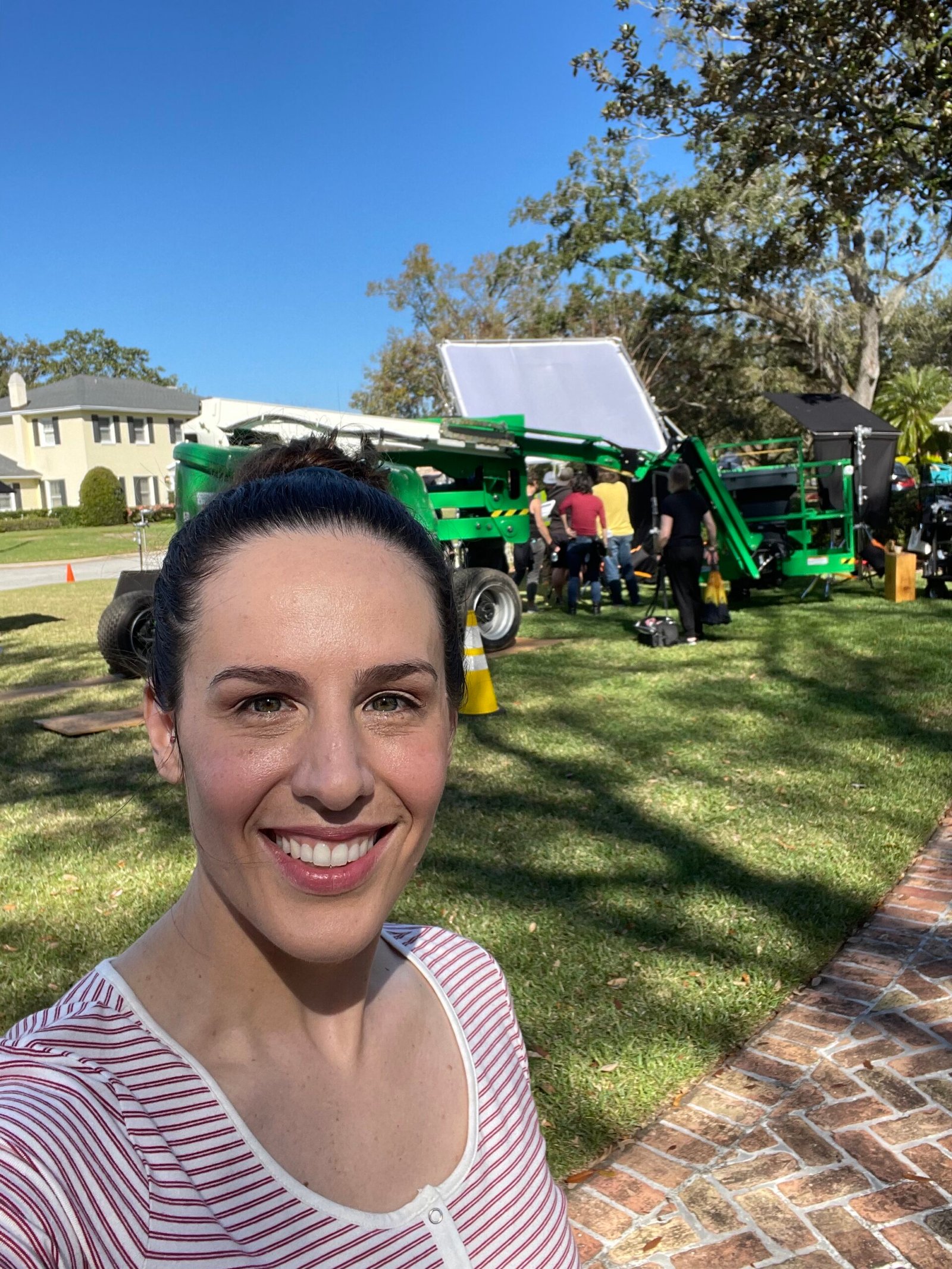
And sometimes, that mindset can show up in something as simple as a smile.
A smile might seem like a tiny thing, but I believe it can have a surprisingly powerful impact on both you and the people around you.
A Positive Performer Mindset in the Performing Arts
The performing arts are, at their core, collaborative. Film sets, theater productions, voiceover studios, rehearsal spaces, and production environments bring together people with different skills who are all working toward the same goal: telling a story.
Sometimes that means dozens or even hundreds of people working behind the scenes to bring a project to life. In those environments, talent matters. Training matters. Preparation matters. But so does the way you interact with the people around you.
A strong performer mindset is not about walking into every room pretending that everything is perfect. It is about being willing to listen, collaborate, adapt, and contribute to the creative process.
I have worked in a lot of different creative environments over the years, from film sets and voiceover studios to underwater performance and other physically demanding projects. One thing I have learned is that people remember more than your performance.
They remember whether you were prepared. They remember whether you communicated well. They remember whether you were willing to work as part of a team. And yes, they remember how you made them feel.
A smile can communicate approachability. It can help a nervous scene partner feel more comfortable. It can ease tension during a long day on set or in a recording booth. It can simply remind everyone that, underneath all the schedules, deadlines, and technical details, we are still here because we love creating.
That is one small way a positive performer mindset can influence an entire creative environment.
1. Your Performer Mindset Shapes How You Handle Rejection
Rejection is part of being a performer. There is really no way around it.
You can prepare for an audition for days, walk into the room feeling great, give a performance you are proud of, and still not get the job. You can record a fantastic voiceover audition and never hear anything back. You can put your heart into a project that gets delayed, recast, or canceled.
That can hurt.
A healthy performer mindset does not mean convincing yourself that rejection never matters. Of course it can sting. We are human, and most of us care deeply about the work we do.
Instead, a strong performer mindset helps you remember that one “no” does not define your talent or your future.
Sometimes the role simply wasn’t right. Sometimes the client had another direction in mind. Sometimes you were one of several wonderful performers who could have done the job.
The goal is to feel the disappointment, learn what you can, and keep moving.
If rejection starts making you question whether you belong in the industry, it is worth remembering that those feelings are common among performers. I wrote more about this in Imposter Syndrome for Performers, including why self-doubt does not necessarily mean you are an imposter.
That ability to continue showing up is one of the most important forms of resilience you can develop as a performer.

2. Your Mindset Affects How You Show Up for Other People
Entertainment is rarely a solo career. Even when you are recording alone in a voiceover booth, there is usually a director, producer, client, engineer, casting professional, or creative team somewhere on the other side of the project.
Your performer mindset affects those interactions… Are you open to direction? Are you prepared? Are you willing to try something different? Can you communicate professionally when something doesn’t go according to plan? All of those things matter.
I have always believed that being easy to work with does not mean being a pushover or saying yes to everything. It means bringing professionalism, respect, curiosity, and a willingness to collaborate. And sometimes, it really is as simple as walking into a room with a good attitude.
That doesn’t mean you have to be cheerful every second. It means being aware of the energy you bring into a creative space.
3. A Positive Performer Mindset Can Encourage Collaboration
Creative work becomes much more enjoyable when people feel safe enough to contribute ideas.
Actors need to be able to make choices. Directors need to be able to give direction. Producers need to be able to solve problems. Crew members need to communicate when something isn’t working.
A positive performer mindset can help create an environment where people are more comfortable doing those things.
Think about the difference between someone who walks into a room ready to collaborate and someone who walks in determined to prove they are the most important person there.
Both people might be talented… But which person would you rather work with again? For me, the answer is obvious.
I want to be the person who brings enthusiasm to the room while still being prepared to listen. I want to be someone who can laugh when something goes wrong, adapt when plans change, and help keep the creative process moving.
A smile can be part of that. So can kindness, curiosity, humor, patience, and professionalism. The performer mindset is not just about what happens inside your own head. It can influence the experience you create for everyone around you.
4. Your Performer Mindset Can Influence Your Professional Reputation
The entertainment industry can feel huge, but it can also be surprisingly small. People work together again and again. Directors hire performers they trust. Producers remember people who were dependable. Clients return to voice actors who made their projects easier.
That means your reputation matters. Talent can and will get you into the room, but your professionalism can influence whether people want to invite you back.
That doesn’t mean you have to create some perfectly polished version of yourself. In fact, I think authenticity is much more valuable.
It means being someone who:
- Shows up prepared
- Communicates professionally
- Treats people with respect
- Takes direction well
- Handles challenges without creating unnecessary drama
- Gives other people room to contribute
- Brings enthusiasm to the work
- Follows through on commitments
Those qualities become part of your professional identity. And over time, those relationships can lead to opportunities you never expected.
5. A Strong Performer Mindset Helps You Through Difficult Seasons
There will be seasons when everything seems to be happening at once. Then there will be seasons when your inbox feels suspiciously quiet.
That contrast can be difficult for performers because our careers are often unpredictable. One month you might be auditioning constantly. The next, you may wonder whether anyone remembers you exist. I have experienced those quieter periods too.
What I have learned is that a slow season does not have to become a season where you stop being a performer.
You can use that time to train, create, reconnect with people, update your materials, explore a new skill, or simply remember why you started doing this in the first place.
I wrote more about this in Ways Actors Can Stay Creative During an Industry Slowdown, because staying connected to your creativity can be especially important when the industry gets quiet.
A strong performer mindset allows you to see your career as something bigger than one audition, one booking, or one month on the calendar. Your career is a body of work that you continue building over time.
- Sometimes you are performing.
- Sometimes you are preparing.
- Sometimes you are learning.
- Sometimes you are creating something of your own.
All of those things count!
That is also something I explore in Abundance Mindset for Actors, especially the idea of building a creative career without allowing scarcity or comparison to control your thinking.
6. Smiling Can Help Shift Your Energy
This is where the simple smile comes back into the conversation. There is actually science behind why smiling can be interesting from a psychological perspective. Research has explored how smiling and positive facial expressions can influence emotional responses and stress.
he Association for Psychological Science has discussed research finding that smiling during stressful situations was associated with differences in how the body responded to and recovered from stress.
That does not mean you can smile your way out of every difficult experience. It means that something as simple as changing your physical expression can sometimes influence how you experience a moment.

For performers, that can be worth remembering.
If you are walking into an audition feeling nervous, taking a moment to breathe, relax your body, and soften your expression may help you shift into a different state.
If you are on a long film day and everyone is exhausted, a genuine smile or a little humor may help lighten the atmosphere.
And if you are sitting in your car after another audition that didn’t work out, sometimes reminding yourself that you are still here, still creating, and still pursuing something you love can be enough to take the edge off.
The smile is not the solution. It is simply a reminder.
7. Your Performer Mindset Can Help You Remember Why You Started
This might be the most important part of all. Most performers did not start because they wanted to spend their lives refreshing their inbox. We started because we loved something.
Maybe it was storytelling. Maybe it was becoming someone completely different. Maybe it was making people laugh or cry. Maybe it was performing on stage. Maybe it was the feeling of stepping onto a set and watching an entire world come together.
For me, it has been all of those things in different ways. I have found myself acting, recording voiceovers, working underwater, creating characters, working in performance capture, taking photographs, and creating projects with other artists.
The forms have changed, but the desire to create has stayed. That is why your performer mindset matters so much. Because when the business side of entertainment becomes overwhelming, it can be easy to forget the reason you started.
Your mindset can help bring you back! Back to the work. Back to curiosity. Back to play. Back to the part of yourself that simply loves creating!
I wrote more about reconnecting with that part of ourselves in The Healing Power of Play, and why play can be such an important part of a creative life.
The Ripple Effect of Positivity
I have seen how quickly energy can move through a creative environment. One person can walk into a room carrying frustration, and suddenly everyone feels it. But the opposite can happen too. Someone can walk into a room with warmth, enthusiasm, and a willingness to collaborate, and the energy can shift.
That doesn’t mean performers should be responsible for keeping everyone happy. We all have bad days, and we all have moments when we are tired, frustrated, nervous, or disappointed.
But when we have the choice, I think it is worth asking ourselves what we are bringing into the room.
- Are we making space for other people?
- Are we listening?
- Are we encouraging creativity?
- Are we contributing to the kind of environment we would want to work in ourselves?
Sometimes the answer can be as simple as a smile. Sometimes it is offering encouragement to another performer. Sometimes it is thanking a crew member. And sometimes it is being patient when something goes wrong.
Those little moments can matter more than we realize!
Don’t Forget You’re Not Alone
The performing arts are built on passion, creativity, and collaboration. Every project, whether it is a film, theater production, voiceover session, commercial, or performance capture project, brings together people who are trying to make something come alive.
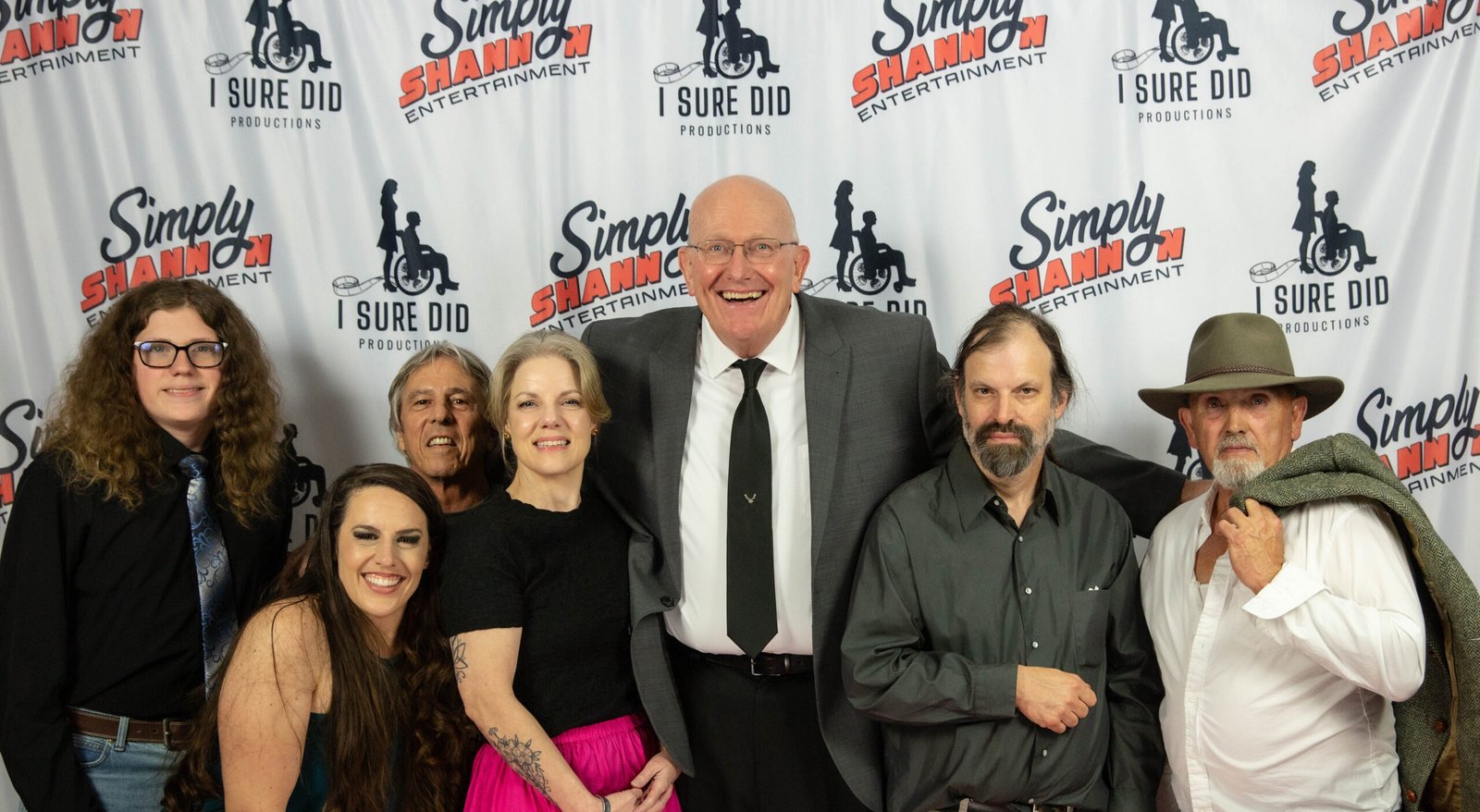
Don’t forget that you are not alone in this crazy industry. I know it can feel like you are sometimes. I have felt it too.
But all of us are trying to make our creative dreams come alive in one way or another. We are auditioning, learning, creating, waiting, celebrating, starting over, and figuring things out as we go. That is why community matters.
Celebrate another actor’s booking. Encourage someone who didn’t get the role. Share a resource. Collaborate on a project. Smile at someone who looks like they are having a rough day.
We don’t have to compete every second. There is room for all of us to grow!
Let’s Create Something Together

Whether I’m working on film, voiceover, performance capture, underwater projects, or live performance, I always try to bring that same positive energy and collaborative spirit into the creative environments I’m part of.
Performance capture has been one of those unexpected paths for me, combining acting, movement, imagination, and technology in a completely different way. I wrote more about that work in Performance Capture Acting, including some of what I have learned about physical storytelling and bringing digital characters to life.
My career has taken me into some pretty unexpected places, and I think that is one of the things I love most about being a performer. I never know exactly where the next project, character, collaboration, or creative opportunity will take me.
If you’re a filmmaker, casting director, producer, or voiceover client looking for a performer who values professionalism, storytelling, adaptability, and teamwork, I’d love to connect and explore what we could create together.
And if you’re another performer navigating this industry, I hope this article reminds you of something important: Your talent matters. Your training matters. Your work matters. But so does the person you choose to be while you’re building your career. Bring your whole self and keep your heart in the work.
And when you can, bring a smile with you too!